The Mundanity of Apocalypse à la Centralia Pennsylvania
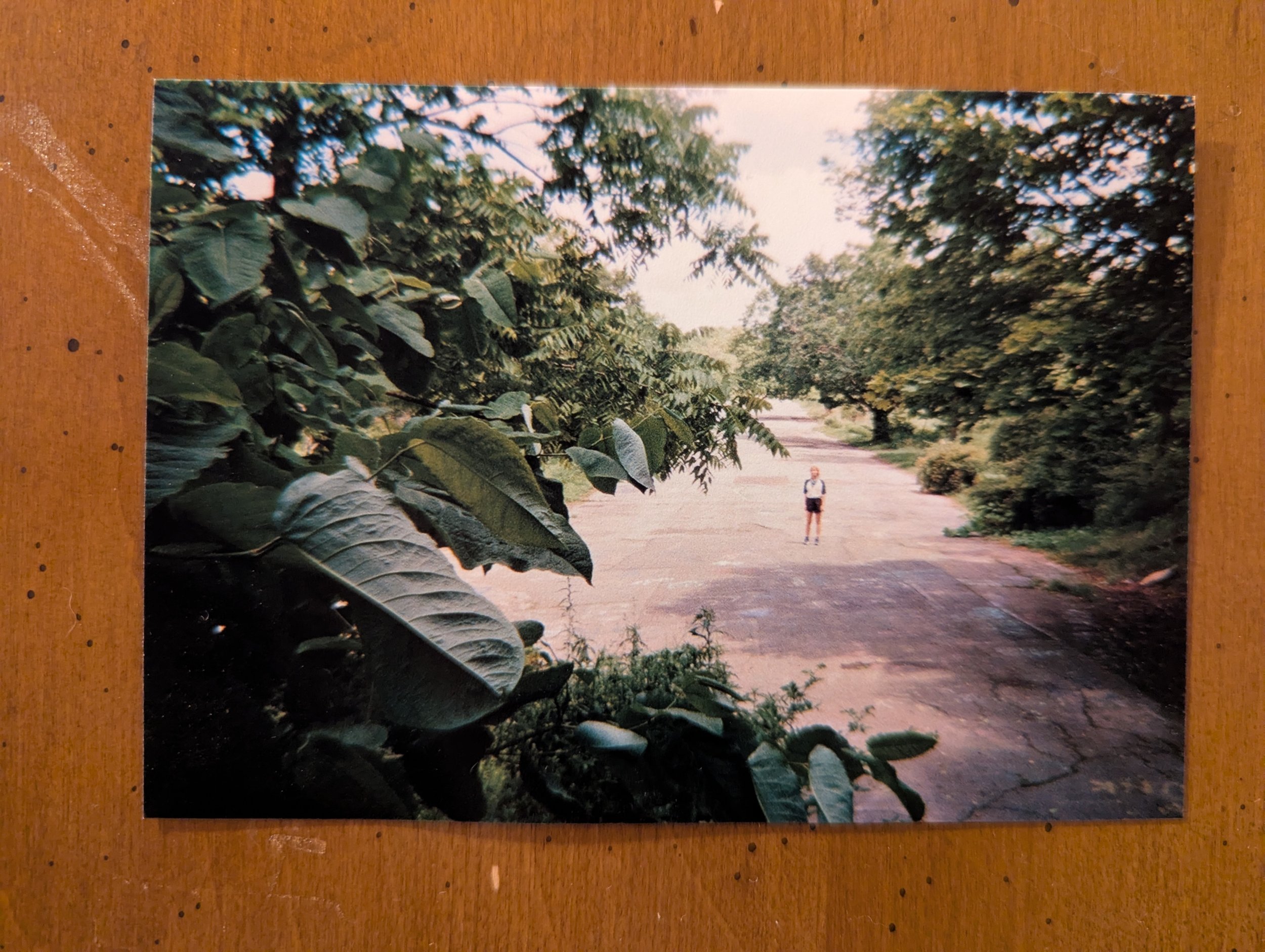
A very washed out and slightly eerie disposable I took in Centralia.
Life is a song, a song
And the fires of hell burn long and dull
-Lingua Ignota, “The Perpetual Flame of Centralia”
On Valentine’s Day, 1981, twelve-year-old Todd Domboski was exploring the woods by his house in Centralia, Pennsylvania when a smoke-filled sinkhole opened up beneath him. He survived, thanks to a conveniently-located tree root and a cousin who was able to follow the sound of his screams.
The story had been recounted on an episode of “Mysteries at the Museum,” a Travel Channel show that middle school-era me watched religiously, and the image of a boy about my age slipping into a pit to what might as well have been hell instantly captured my attention. After a dramatic reenactment of the Domboski affair, the episode recounted the event’s genesis: an underground mine fire that had been smoldering beneath the borough of Centralia since 1962.
Most agree that the seam of anthracite coal was ignited right before Memorial Day, when the city council ordered a local landfill be set aflame (as was the standard approach to dealing with trash in the early 60s). Though firefighters were on the premises, the proximity of the dump to a maze of abandoned coal mines beneath the surface made the situation tenuous. Somehow, flames traveled from dump to dart.
In the days and weeks that followed, residents noted occasional fires and smoke plumes along the outskirts of the town. By the time measures were taken to stifle the subterranean blaze, it was too late. It took young Domboski falling into a pit of fire and brimstone for the real exodus to begin. Houses were bought up and bulldozed by the state of Pennsylvania. The town was reduced from over a thousand residents to five by 2000. And today, the fire continues to burn.
The story ignited in me a macabre fascination with the Pennsylvania ghost town that’s lingered ever since. The regularity with which Centralia’s flames lick the cultural zeitgeist in literature (it figures prominently in Dean Koontz’s 1995 short story collection, Strange Highways), film (the abandoned ashy town of Silent Hill in the 2006 film of the same name was directly inspired by Centralia), and music (Lingua Ignota’s haunting “The Perpetual Flame of Centralia” blends the region’s Appalachian musical roots with coal-smeared rage), only fueled my intrigue.
Last summer, I finally made the drive up from Philadelphia to Centralia. Reddit posts warn that little draw remains. Gone are the pits spewing white smoke that Bill Bryson described in A Walk in the Woods while commenting that Centralia is “the strangest, saddest town I believe I have ever seen.” The stretch of Route 61, cordoned off due to the fires and transformed by taggers into a shifting canvas affectionately named "Graffiti Highway,” was buried in 2020.
The fire still burns, but its hunger drives it deeper: it’s traveled through layers of time to more ancient sources of death condensed to fuel hundreds of feet below the surface. On a cold or rainy day, accounts claim, one can still observe steam rising from vents in the hillside.
It was neither cold nor rainy when we rolled through the Pennsylvania Coal Region, an area covering about six counties, populated by towns with names like Frackville and Minersville. As we drove between the rolling green ridgelines that define the Appalachian Highlands, we noticed occasional swathes of disemboweled land where a flailing coal industry had turned to strip mining as shallow mines were depleted. By the 1950s, the industry was digging deeper in an attempt to satiate its appetite for fuel, but the fire’s resolve proved stronger.
We could have driven straight past the town without knowing. In fact, we had to back track, as it slowly dawned on us that the regular unmarked turnoffs we’d assumed were driveups to rural residences were Centralia’s main cross streets.
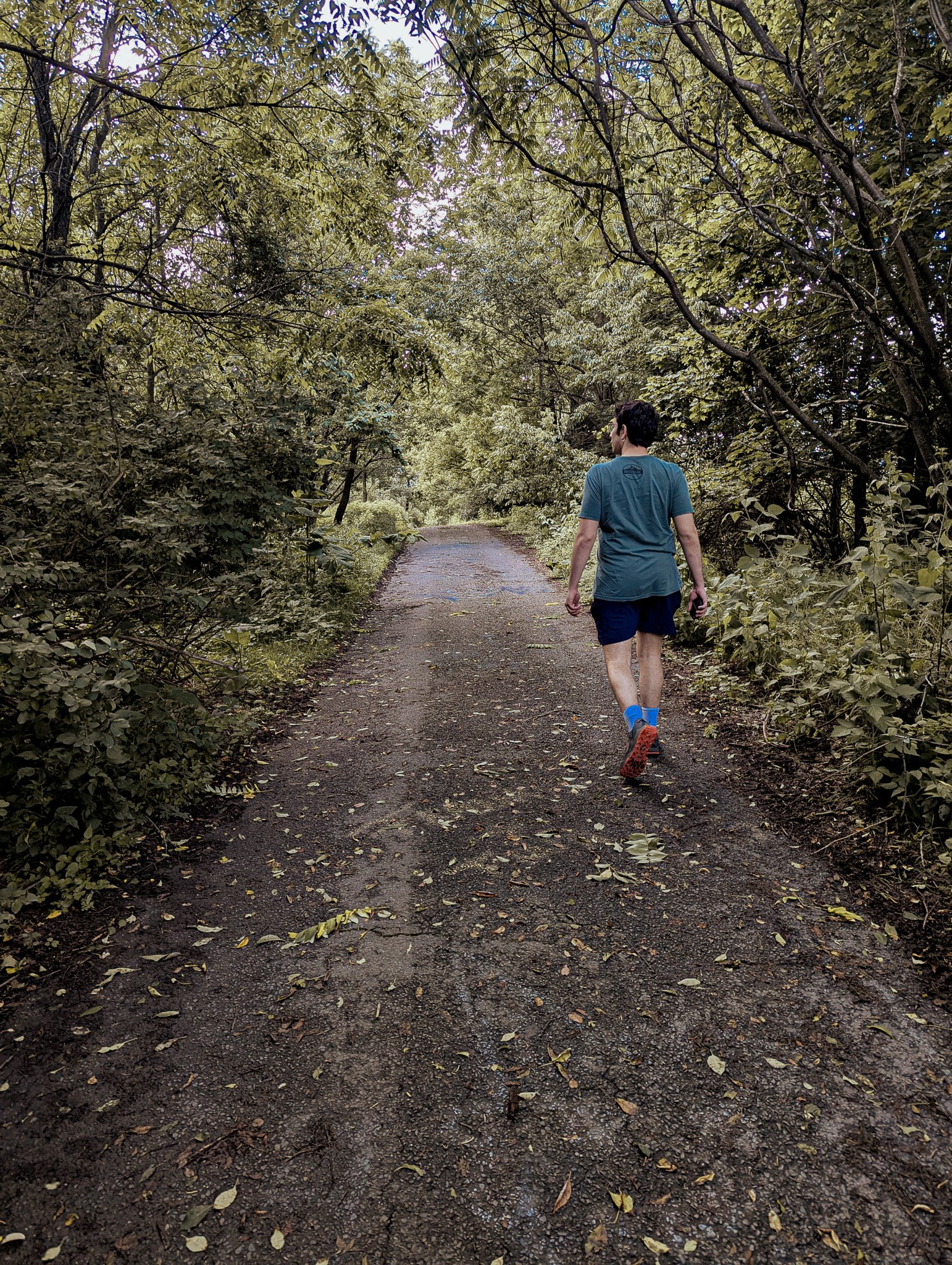
A trail through the largely abandoned borough, which is gradually being retaken by the forest.
Photo credit: Sophie Aanerud
We parked in the middle of an abandoned road. Beneath the buzz of cicadas, we joked that we were more concerned about coming face to face with a shotgun barrel than slipping into a sinkhole. Here and there, a singular rowhouse, long severed from its demolished neighbors, materializes from the forest and the situational absurdity of the place condenses into a reality far sadder—people still live here.
The residents of Centralia were mostly the descendents of immigrant mining communities, left with few options as the energy sector shifted away from coal. The fire was a cruel twist of fate, turning the coal mines that once sustained the community into the source of its inhospitality. Some continue to live in defiance of that twist.
When I first learned about Centralia, I was baffled to discover that most residents continued living in the borough (at least for a while), while perfectly aware of the fire. Even when carbon monoxide filled basements and tomatoes sprouted from the soil in the dead of winter, residents simply shrugged; some started keeping canaries in their basements.
I’m still not sure what it was about Centralia that captivated me as a teenager. Was it the sudden violence in a child being swallowed up by the ground? The strange obstinance of those who chose to stay put in spite of the smoldering monster beneath their feet? Did I sense a tidy metaphor for my own climate anxiety?
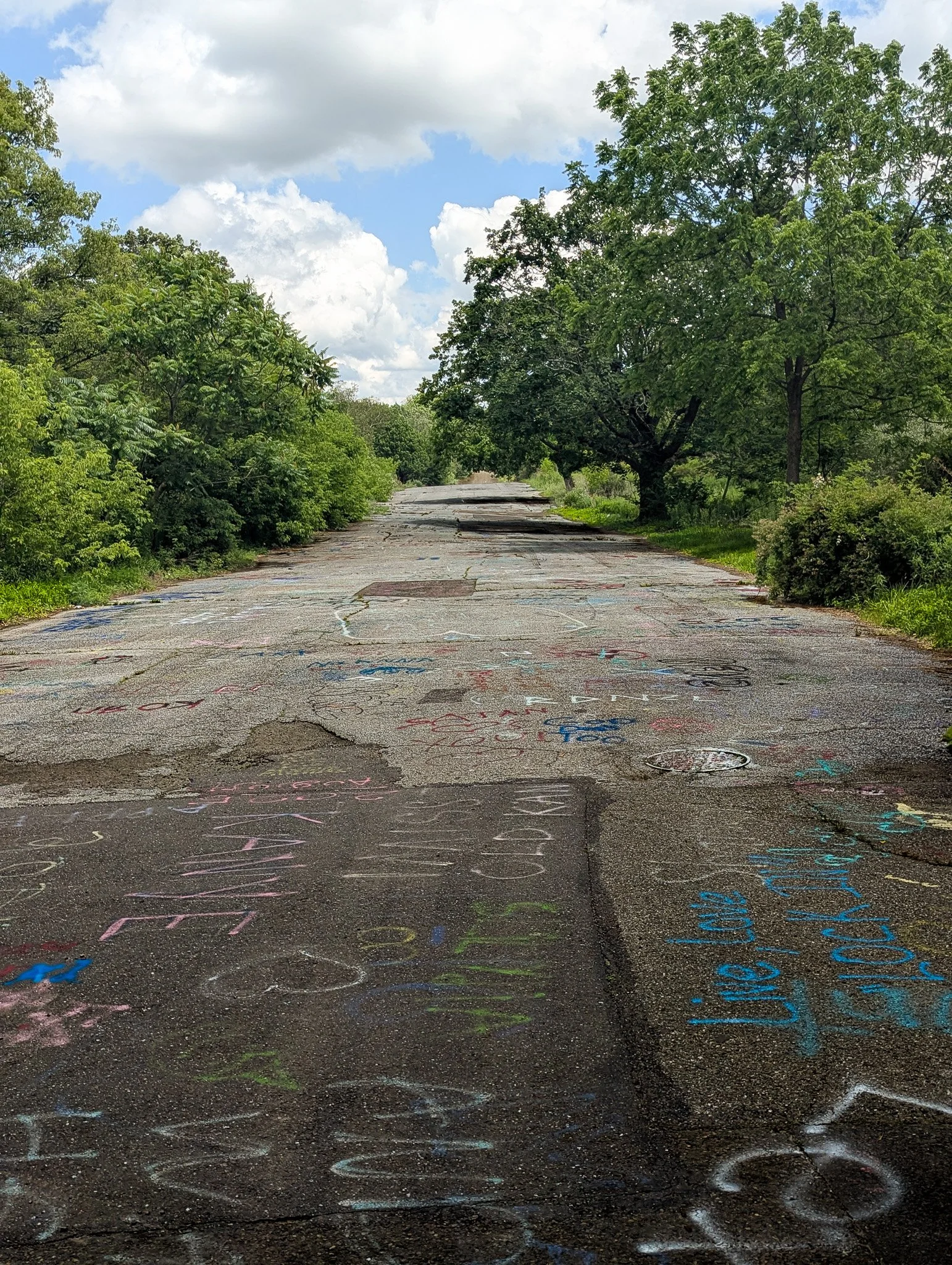
Though the famed "Graffiti Highway" has been buried, visitors continue to find new canvases on roads once lined by houses.
Photo credit: Sophie Aanerud
As we wandered on through the town that was turning to forest before our eyes, I tried to comport the peaceful loveliness of the place with the knowledge that a few hundred feet below us, an all consuming inferno burned. Centralia’s hellfire belies popular depictions of apocalypse. Its drama lies in the utter incongruity of the situation, the unpredictability, the fact that it is happening at all.
The truth of apocalypse is that it is uneven. For every Todd Domboski who falls into a smoldering pit, there will be a child separated by 30 years and thousands of miles, who’s utterly engrossed as she watches a dramatic reenactment on TV.
Sometimes apocalypse comes quickly in a barrage of bombs or the flashing of a flood. Usually, it’s mundane. In the United States, we’re experts at hitting the snooze. Two nights after I visited Centralia, I was attending a wedding when a notification bloomed at the corner of my phone: the U.S. had bombed Iran. We briefly discussed the situation, then returned to dancing—apocalypse had crept an inch closer, but we weren’t in Iran; the suffering of people in distant nations was something our country had trained us to write off as inevitable. A week later, a flash flood killed 135 people in Central Texas, mere miles from where my parents lived. I was shaken, but brushed this off as a premature flare in the impending march of climate change.
Back in Centralia, the tragedy of the situation was gentle, as subtle as the first flames that somehow deceived a team of firefighters. We passed beyond the grid into infant wilderness. Oak and sumac pushed through degrading concrete. The young forest erupted in a lushness that belied the occasional yellow signs warning visitors of toxic fumes and shifting ground. Soon the signs will be illegible beneath the spread of green.