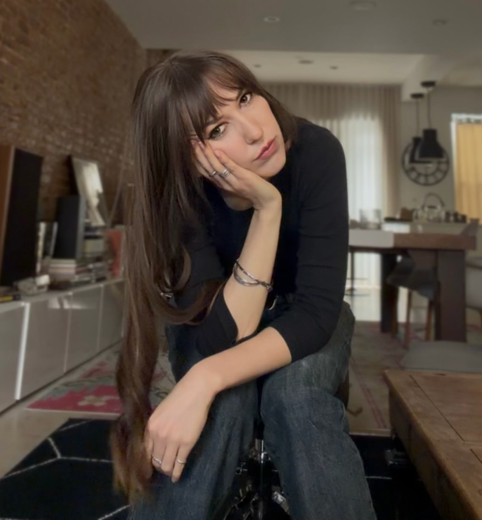
This Is Why You Can’t Decide
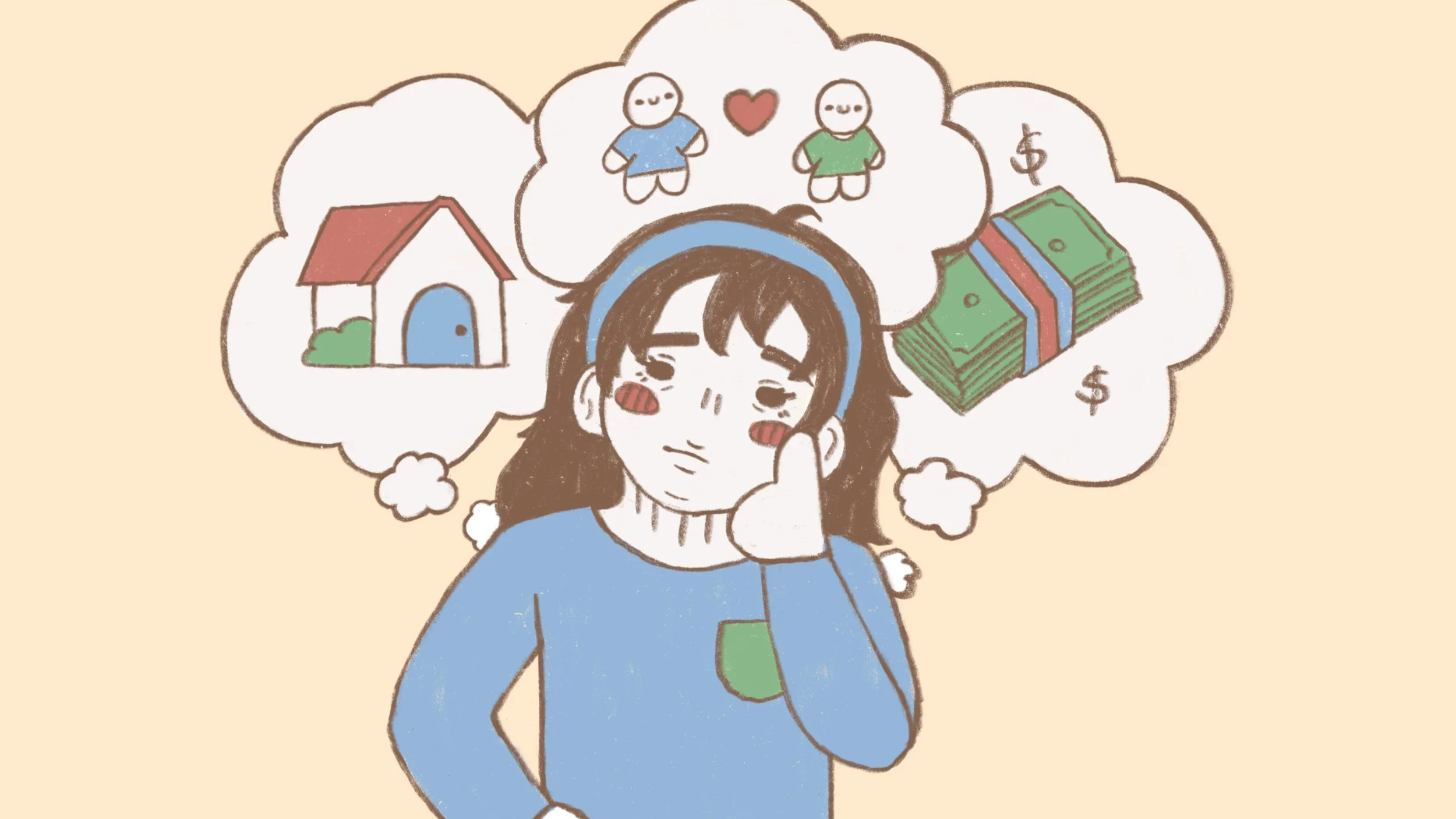
Illustration by Geliza Paunan
I hate having too many groceries in the house at one time. I’ll spend minutes to hours in the kitchen scanning over the same ingredients in the fridge and pantry trying to decide what to make. I’ll just stand there stuck in a sort of a paralysis unable to make a very simple decision. One I have to make almost every day. What to make for dinner. I can’t go wrong! There is no wrong answer. I just have to choose one. And yet, I seem to be stuck with choice overload.
I didn’t used to be like this. This is new. I used to think about one thing that would sound appetizing and make it. That was enough! But suddenly I’ve come to realize I have a really hard time deciding what to do. Whether it’s making dinner, choosing a book to read, movie to watch, where to go on a saturday night, etcetera. And talking to people around me, I’ve noticed a similarity. Maybe in today's world, we are filled with too many options making simple tasks and choices into crippling decisions for no reason at all. So why is it so hard to commit to something so small as to pick what to cook?
Making big decisions and choices can be overwhelming and nerve wracking for many. That’s normal. It means these choices can impact your life and future greatly. There’s more risk in taking the chance in something. But in 2026, people are taking less big risks than ever. And even less small risks too… And maybe even no risks at all… sticking to routine. Trying a little bit of everything without committing to one thing long-term. Could it be that we don’t have time for real commitments anymore? That everything is fleeting and there’s too much choice?
Real commitment used to lead to milestones. A marriage, a mortgage, a job, a new city. These were all declarations, not just one-off choices or premeditated decisions. Today, permanence feels less like security and more like risk: to our identity, our autonomy, our finances, even our sense of self—especially as a woman who has been told both to settle and to have it all.
Fair warning, this essay is not nostalgic for compulsory marriage or shrinking yourself to fit into someone else’s script. Having independence and more choice in who we want to be or how we want to live, can easily be seen as having freedom too. A kind of freedom our ancestors may not have had in the past. Having this opportunity helps in dismantling the patriarchy’s timelines.
But circling to something quieter and harder to admit: why does choosing anything feel so loaded now? Why does it feel almost dangerous to commit—to master something, build something, marry something, and stay?
Culturally we’ve made a shift from sticking around to see things come to fruition, build up from a foundation, or even start something at all. If this sounds like you, it’s most likely not your fault.
We are seriously overwhelmed by choices in all areas of our lives. In dating, eating out, hobbies, things to watch, etc. and it’s leading to sort of paralysis and feeling stuck in our near myriad of options.
We swipe past people. We postpone decisions. We keep apartments lightly furnished and careers loosely defined, living in what feels like “draft mode.” The issue isn’t that we’re uniquely indecisive. It’s that permanence itself feels unsafe.
We live in a hyper-choice culture where options aren’t just abundant, they’re algorithmically amplified. Every time you open your phone, you’re shown alternate versions of your life. Someone else’s body, business, marriage, or a big move to a foreign country… It’s like a magic mirror offering infinite identities you could try on. Living in a sort of comparison of the haunting image of Sylvia Plath’s fig tree analogy, of each branch of a life unlived.
Choice, in theory, equals freedom. In practice, it fractures attention. You can’t live through inspiration from consumption alone. At some point, you should be inspired to create. And for many today, starting the creation/craft process feels like it requires too much discipline, time, and commitment when nothing in the world feels stable or strong enough to support anything permanent.
Research by Gloria Mark, who studies digital distraction, shows that constant task-switching reduces sustained focus and increases stress. When your attention is perpetually interrupted, long-term decisions feel heavier. Not necessarily because they’re wrong, but because you’re exhausted.
You cannot commit deeply to something while your mind is trained to skim.
Culturally, skimming is rewarded with more information or entertainment. Reinvention and starting again is seen as aspirational.
Sociologist Zygmunt Bauman once described modern life as “liquid,” arguing that flexibility has replaced stability as the highest virtue. To commit too deeply is to risk obsolescence. You don’t stay; you optimize.
Economic instability seems to reinforce this. According to the Pew Research Center, younger generations are marrying later, moving more often, and changing careers more frequently than those before them. When housing is precarious and industries collapse overnight, flexibility feels less like a personality trait and more like survival.
But economics doesn’t fully explain the dread that accompanies even small decisions—what city, what job, what partner.
Part of the paralysis comes from the belief that there is one correct choice waiting to be discovered. Laurie Santos, who teaches “Psychology and the Good Life,” at Yale, has shown that we’re terrible at predicting what will make us happy. We overestimate how transformative big decisions will be and underestimate how adaptable we are. The fear of choosing wrong is often bigger than the consequence.
Still, choosing closes doors. And that closure can feel like grief. When you commit to a path, you relinquish the fantasy of all the others. In a culture that tells women in particular that they can—and must—be everything, choosing one thing can feel like betrayal.
But commitment is not surrender. It’s an allocation of attention.
You don’t “settle.” You decide what kind of regret you’re willing to live with.
The regret of choosing and discovering it wasn’t perfect. Or the regret of never choosing and never finding out.
If you’re creative, ambitious, curious—of course you want multiple lives. That desire isn’t frivolous; it’s expansive. But the people who eventually live expansively are often the ones who committed somewhere long enough to build leverage. A skill. A network. A body of work. Depth becomes mobility later.
The Comfort in Predictive Narratives
I was at dinner recently with a PhD student in psychology and asked him what he thought consciousness was. He started talking about prediction—how the human brain constantly simulates possible futures before we act. It’s a remarkable ability. But he admitted something honest: sometimes he gets addicted to imagining all the possibilities instead of choosing any of them.
That stuck with me.
Economist Herbert Simon once called this bounded rationality: we have limited time, energy, and information. We cannot optimize every choice. Trying to do so is not sophisticated but rather it’s destabilizing.
There’s also something in modern therapy culture that confuses discomfort with danger. We’re encouraged to listen to anxiety, which is valuable. But not all discomfort is a warning. Sometimes it’s just the sensation of growth. Permanence can feel uncomfortable because it requires trust without guarantees.
And yet, long-term research from Harvard University’s Grant Study suggests that sustained relationships and meaningful work, not just constant novelty, can predict one’s overall well-being. Depth in all areas of life matter. Or should matter. Intensity beats infinity. But that requires feeling more, committing to highs and lows. When the world feels so insatiable and without any safety nets. You may ask, why take the risk and lose it all?
The Risk of Failure
Some people freeze because they’re afraid of failing publicly. We’ve been fed motivational quotes about failure our whole lives, but in an unstable economy, the stakes feel higher. The reward doesn’t always seem worth the fall. But avoiding the leap is its own risk. Stagnation has a cost too.
Psychologist Angela Duckworth, known for her research on grit, found that long-term fulfillment is less about choosing perfectly and more about sustained effort. Passion often develops through investment. Meaning is given to things built and learned from one’s own experiences.
The career begins to feel aligned after years of shaping it. The partnerships begin to feel right after potential conflict or obstacles have endured. The city begins to feel like a home after loneliness has survived, memories have been made, and trials have run.
Depth is merely a function of time and experience.
When a psychological view can help justify and help rationalize the feeling of being stuck with choices, philosophy might be the solution to get through it.
Relief in Making a Choice, Big or Small
It’s time to look at solutions on this issue from a philosophical standpoint. Danish philosopher, Søren Kierkegaard, once said anxiety is “the dizziness of freedom.” When every path seems possible, standing still feels safer than choosing one. But the reality from history learned is that choosing one path doesn't erase the other versions of yourself on the other paths; it integrates them. This means that committing to a career doesn’t kill your other talents. Loving one person doesn’t deny that others could have worked. Choosing an aesthetic doesn’t imprison you forever. You can pivot. You can evolve. You can re-choose.
The fear that many people face isn’t really about ‘permanence.’ Most of the time, it might actually be about identity and about worrying that if you pick one version of yourself, the others disappear. Forever. And you’re stuck with the age old “what if” question that haunts you for the rest of your life.
They don’t. You don’t need to live every life you dream of. You just need to live deeply with one. I know that sounds easier said than done. We make a million choices every day that affect our life that we hardly think about or give second thought about. While some choices seem more intimidating than others, it’s noble to pick one at all. And you can do it. There is no cosmic green light from above, or perfect certainty before you commit to something. Clarity usually follows action. You make the best decision you can with the information you have. If it shifts, you adjust. There’s no failure in that. Simply living as humanly as possible.
We’ve mastered keeping our options open. Maybe the more radical act now is staying. Not because we’re told to. Not because we’re afraid. But because building something—really building it—requires time.
Meaning isn’t found or given to you. Meaning, in the end, is something we choose to give to anything at all. The freedom in that should be exhilarating. It is exhilarating! So… what will you choose?