What Can Dan and Phil Teach Us About Forgiveness? Extending Grace Online
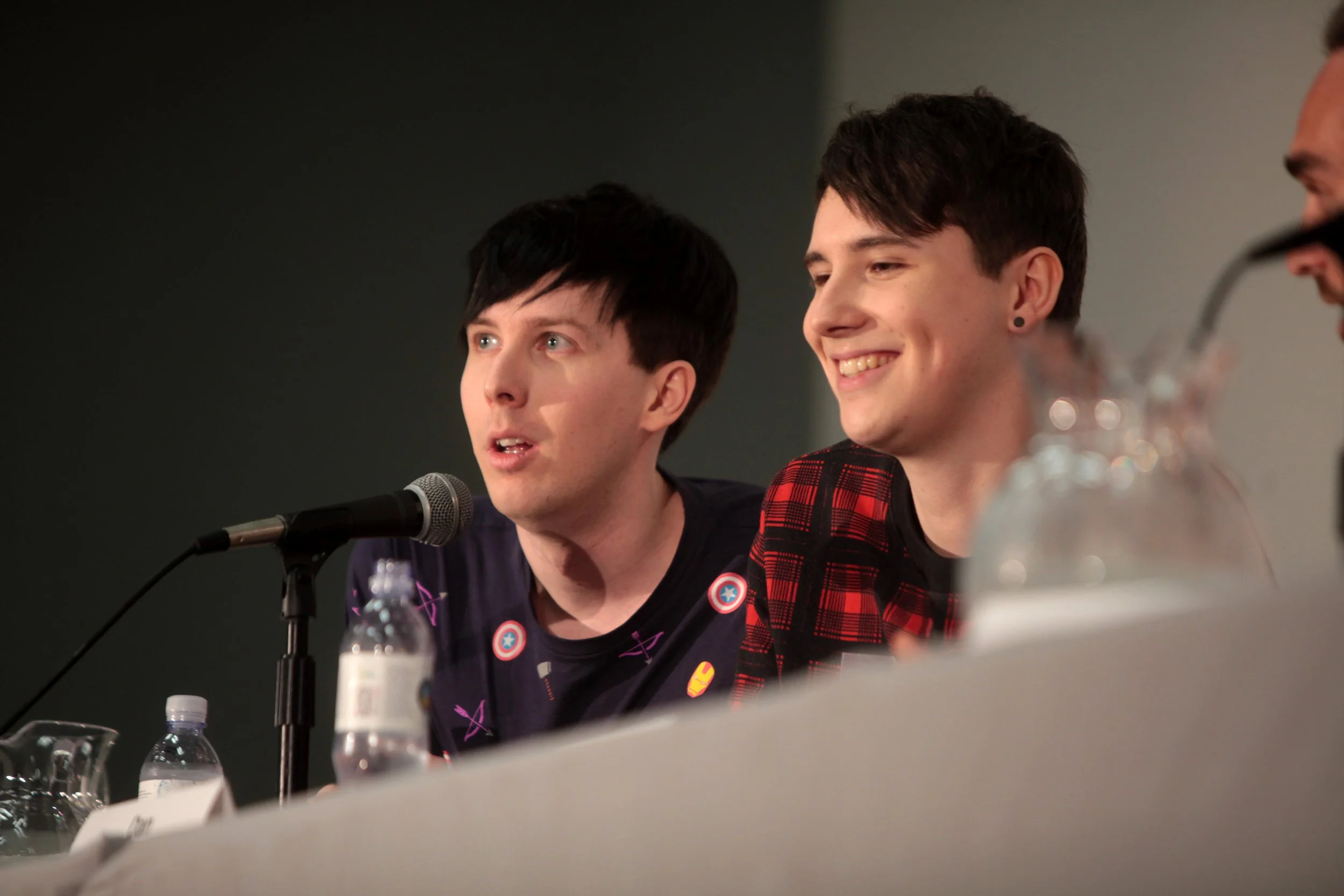
Photo credit: Gaga Skidmore
Dan Howell and Phil Lester speaking at the 2014 VidCon at the Anaheim Convention Center in Anaheim, California.
I believe everyone should have one interest that they would shriek in a Whole Foods for. For me, that’s British YouTube sensations Dan and Phil. After sixteen years of joint content, online speculation, deflection, three successful tours, a hiatus, and a much-anticipated return, Dan and Phil confirmed their relationship.
In a touching video essay, the two not only discussed the profound impact they have had on each other's lives but also the struggles that had accompanied the years of keeping their relationship private. This was a step forward for them–after many years, they were shedding the burden of secrecy while still maintaining a level of privacy, highlighting their complex relationship with parasociality.
What followed was a collective celebration from all the fans who had followed them for the past sixteen years, those of us who were active watchers or those who remembered them as fond teenage memories. Memes circulated across Tumblr and Twitter. Fans cried, celebrated, and congratulated the two.
Miraculously, the reaction to the announcement remained almost entirely positive. I initially chalked this up to the age demographic of Dan and Phil fans. Many of us have experienced fandom discourse before and have come out the other end with at least slightly improved communication skills. However, anyone involved in internet fandom will know that age and experience are not always deterrents to infighting.
I believe the answer to why the conversation has remained so civil lies within Dan and Phil's content broadly and in one specific section of their announcement video. Dan spends a significant portion of this video discussing the negative effect that the audience's prying had on his life and his relationship. However, after expressing these feelings, Dan makes one incredibly important comment:
A lot of the bad guys weren't bad people. They were just young people who had absolutely no idea what the effects of their actions were, or how bad and triggering it was for someone with my backstory. No one could have known that. But forgiveness and growth are such an important part of life. And in the same way that we all want the people in our lives to give us patience and grace and the benefit of the doubt if we ever make a mistake, I have to extend that to the world in regard to this story. So I understand, and I forgive. I want to make peace with it.
It is this comment that most significantly shifted the conversation away from discourse and shame and towards something more productive and joyful. I saw many people expressing thanks for this sentiment, or a relief at the grace that had been extended to their past selves. But one question I can't help but think of is, what does this type of forgiveness look like, and what is its use to us? Dan and Phil have a lot to offer us as members not just of their online community, but as citizens and contributors to the internet.
Dan Howell and Phil Lester are long-time YouTubers, comedians, and former radio hosts. Both grew to prominence in the mid to late 2000s and have amassed millions of followers between their joint and individual channels. The two rose to greater prominence during the early 2010s alongside the British Vlogger Boom. In 2014, they created their most well-known channel, formerly known as “DanAndPhilGames”. The project was wildly successful, propelling the two men to internet stardom.
As well-known as Dan and Phil were, their fandom, or the Phandom, is perhaps as famous. The duo’s embracing of “cringe” and “nerd” culture, as well as their adoption of the emo style, cultivated a young and dedicated audience. The Phandom has always been marked by its enthusiasm, drawing cat whiskers on their faces with Sharpie (yes, I have done it), spamming random quotes from the duo’s April Fools videos across YouTube comment sections (Protip), and generally spreading memes about the two like wildfire (“open can” anyone). However, this enthusiasm has also manifested in a deep and oftentimes invasive interest in Dan and Phil’s personal lives. Specifically, trying to answer the question: Are they dating?
At its most harmless, this has manifested as pieces of fanfiction and fan art depicting the two in a relationship. At its worst, though, this question has led to the circulation of private videos, the culling of old tweets, and online harassment. What’s worse is that for much of their career, the two men were closeted, and the speculation was twofold, questioning their relationship and their sexuality. In December of 2018, this amounted to Dan deciding to go on hiatus. “DanandPhilGames” stopped posting, and while Phil continued posting on “AmazingPhil”, Dan’s personal channel went dark for almost a year. His hiatus was broken with one of his most popular videos, “Basically I’m Gay.” In the nearly hour-long essay, Dan chronicled his struggle with his sexuality and his road to acceptance. The video was incredibly well received and was met with an outpouring of love and support from the Phandom, many of whom were queer themselves. Phil also posted his own, shorter, more lighthearted coming-out video, which was met with similar support.
“The Hiatus”, as it came to be known by fans of “DanandPhilGames,” lasted for five years. “AmazingPhil” remained active, and Dan continued to maintain a lower internet profile while pursuing wildly successful offline projects, including his bestselling book You Will Get Through This Night and a solo comedy tour. The Phandom remained active but mellower, and most accepted the fact that the days of “DanandPhilGames” were over. Until they returned.
Two years ago, “DanandPhilGames” made its triumphant return to YouTube, maintaining the duo’s philosophy of lightheaded content and embracing cringe, but significantly queerer and more open. The two were notably more relaxed, made more overt references to their fandom's culture, and poked fun at some of the speculation. The Terrible Influence Tour (#DNPTIT) was an overview of their entire careers; they openly discussed fan theories as well as the role their audience has played in their lives. Importantly, their tour was not an all-out condemnation of their fans nor parasociality as a whole. Although tongue-in-cheek, they ask an important question: “What role did we have in this?”
This is the line that Dan and Phil walk. They have been critical of overreaching fan culture for years, and yet this question provides more nuance than is often brought to the conversation around parasociality online. It is that very line between condemnation and understanding that I think is so important, especially in their recent announcement video.
“Are Dan and Phil in a Relationship? The Truth” is a forty-five-minute part confession, part video essay, part comedy sketch, and part podcast announcement in which Dan and Phil open up to their audience and reveal their sixteen-year relationship. The video is beautiful and profound and so incredibly sweet, kind, and funny. If you’ve never heard of Dan and Phil before or have been a longtime viewer who, for some reason, passed over the video, I encourage you to watch it. However, the revelation that Dan and Phil have been dating is not what interests me the most about this video. It is Daniel Howell forgiving his audience.
Forgiveness is a difficult concept. The question “Why should you forgive someone?” would probably garner several different answers. Is it for your own benefit or theirs? Is it the closing of a chapter or the opening of a new one? To forgive someone, must they acknowledge wrongdoing? Does forgiving someone inherently mean they’ve done wrong? The answer is most likely yes to all of these questions and more. Why we forgive even a singular person is complex. This complexity is heightened online and within fandom spaces where forgiveness is often not doled out to individuals but to whole groups of people. As Dan said in his announcement, his forgiveness has to extend to possibly millions of people.
My first question when hearing this statement from Dan was, “What is the function of this?” Is this sentiment of mass forgiveness even beneficial? The fans who didn’t overstep boundaries and thus don't need to be forgiven are lumped together with those who did. And is a general sweeping statement at all comforting for those who did engage in this type of behavior? I think a fair amount of skepticism is warranted. Dan and Phil have been open about the dangers and harm of parasociality, and one of the best ways to combat this is through skepticism. Included in this video was an announcement for their new, mostly crowdfunded podcast, “Hard Launch.” A video openly discussing the emotional harm caused by prying fans may leave many feeling hurt, embarrassed, and alienated. None of which promotes Patron subscriptions. YouTube is their job, and they rely on engagement from their audience. Letting fans know they don’t need to feel guilty over their actions is a decent way of preventing viewers from clicking off. As I said, the reaction to this video was largely discourse-free. Perhaps Dan’s statement was largely a preventative measure to quell guilt and indignation that may lead to a loss of viewership.
While I’m sure audience retention did play some role in this statement, I am not cynical enough to believe that is all there is to it. In fact, I think this has very little to do with the audience. Yes, I do believe this statement has quelled much of the possible discourse. But I don't believe that was its main function. The internet, over the past ten years, has become an increasingly hostile place. While there have always been fringe communities that were fueled by hate and anger towards others, nowadays, it seems to be the standard. Bullying and surveillance culture have become increasingly normalized. Open any Reddit forum, and you’ll be confronted with casual vitriol from nearly every community. Even major influencers seem to have a disdain for their own audiences. The conversation around the issues of parasociality, while important, has remained largely one-sided. The discussion is often started by the creators about their audience. Creators' concerns do hold weight, and fans overstepping boundaries should be reprimanded, no matter the context. However, there seems to be a persistent assumption that fans act with bad intentions, which can frame the creator-audience relationship as one that is adversarial. It is this assumption, I believe, that leads to the “fandom civil wars”, where supporters feel the need to defend their favorite creators from other “bad” or “malicious” fans. It is this belief that I believe Dan and Phil’s video combats. It is not that Dan says “I forgive you all,” that is actually important. At the heart of his statement, what he’s saying is “I know you didn't mean to hurt me.” This should be the takeaway.
As conversations around boundaries between fans and creators become more prominent, we must remember that parasociality is twofold. Yes, fans must remember that they do not actually know their favorite creators. However, creators can not expect fans to intuit their feelings if they are not explicitly stated. If their audiences are causing them emotional harm, it is very likely not out of malice. As Dan said, “no one could have known,” at least not the extent to which he was affected. It doesn't excuse overstepping nor negate harm, but it does contextualize it.
It is this extension of grace that we must learn from. It’s a moral idea we’re taught as children, but one that is difficult to practice in an online space. We have access to more people than ever, and with that must come firmer boundaries and a healthy dose of skepticism to keep us safe. However, immediately assuming the worst of others cuts us off from meaningful connection, and it paints how we see both the “real” and digital world. If we want to engage with others online, we must be able to forgive and extend grace. Not just because they “deserve it”, but so that we do not construct a world full of malicious actors.