Why Everyone’s Obsessed with Obsession
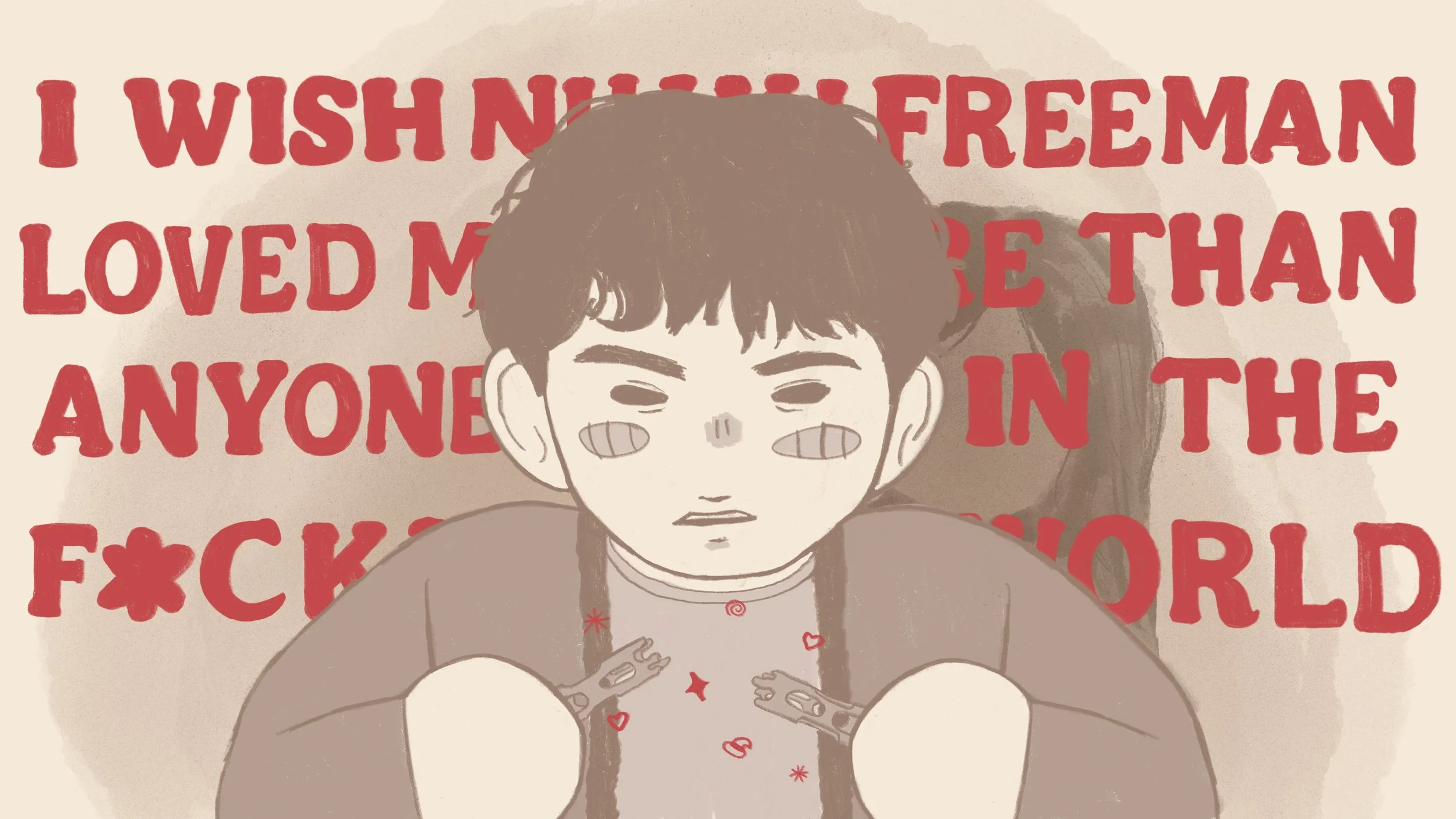
Illustration by Geliza Paunan
“Have you heard what’s happened? Barbie’s changed!”
When Obsession debuted in theaters, it was hailed as a micro budget horror film, written and directed by 26 year old Curry Barker on $750,000 and a dream. Since then, the film has defied all expectations. While it did well opening weekend, it’s been on an upward trajectory, with ticket sales 39% up from its debut weekend – a trend that’s particularly uncommon for horror films that usually see ticket sales drop sharply after opening weekend.
Obsession is a film that begs to be seen in the communal space of a movie theater. The darkness of the theater, the absence of phones and distractions, the way you have no control over the movie as it plays unrelentingly through each tense scene, create an atmosphere of claustrophobic panic. People gasped, laughed, screamed, and jumped when I went to see it. The movie brought life back to the theater.
When a horror movie does well, there are always questions to ask about why so many people would enjoy seeing a movie that terrorizes them. You can answer this question with the technical aspects of filmmaking, the ingenuity of the storytelling, or the power of the acting. But a successful horror movie also speaks to something more innate in our societal consciousness. Horror movies do well when they prey upon the fears most forefront in our minds. In the case of Obsession, Barker hits on a myriad of fears currently plaguing communities – especially for the young, Gen Z moviegoers that have responded overwhelmingly positive to his film. There’s a woman’s loss of agency, a portrayal of the “nice guy” gone bad, and an almost technological metaphor playing in the background of this film. Taken together, it’s a smorgasbord of the things we fear the most, making it no wonder why so many people are obsessed with Obsession.
At its core, the premise of Obsession plays on a well known trope. Bear, our main character, is in love with a girl, Nikki, who probably doesn’t love him back. While trying to find a necklace for Nikki in a crystal shop, Bear picks up a “One Wish Willow” – an item he thinks is just a tchotchke gimmick that promises to grant the person who breaks it one wish.
After being unable to tell Nikki he likes her, Bear breaks the willow, uttering his ultimate wish: “I wish Nikki Freeman loved me more than anyone else in the fucking world.” And to the horror of everyone, Nikki most of all, the wish comes true.
The terror of Obsession is divided into almost three different people: the culpability and “incel horror” of Bear, the insanity of Post-Wish Nikki, and the fleeting glimpses of Pre-Wish Nikki that haunt the narrative.
Bear is the “nice guy” who just wants to get the girl. It’s a common romance trope. He’s the nerdy, quieter guy chasing after a girl out of his league. The scary thing about Bear, though, is that he thinks he is owed that girl.
There is nothing to Bear besides his obsession with Nikki. We don’t know anything about him. He has a cat that dies in the very beginning of the film, and a grandmother that died before the film starts. While Nikki wants to be a writer and speaks about her work with passion, Bear has no ambitions. He’s defined only by the girl he wants.
It’s this obsession with Nikki that drives Bear to totally remove any and all agency Nikki has, trapping her in an obsession that mirrors his own. Even when Nikki acts insane, making cats into sandwiches and reading a grim retelling of Hansel and Gretel as siblings who are sleeping together aloud at a party, Bear pretends everything is fine. When his friends point out the craziness that’s happening, Bear dismisses them, keeping his relationship with Nikki even though he knows something is wrong.
The worst of Bear comes in his interactions with Nikki after he makes the wish. He continues to sleep with Nikki, even though she isn’t herself anymore. As they have sex, the camera focuses on Nikki’s face, devoid of any emotion, staring off at the wall as she goes through the motion of moaning and making sex sounds. The one time Nikki recovers her agency enough to talk to Bear and she begs him just to kill her to free her from the wish. All Bear can say in response is, “What would be so bad? What's so bad about being with me?”
In the aftermath of Obsession’s release, scores of people have taken to the internet to debate if Bear is a bad person or not for his wish. Here’s the truth: it’s almost worse if he isn’t. Bear starts off the film normal enough – he’s just a guy with a crush. But if that average, regular guy can go through with this, if he can condemn a girl to this level of hell and still continue to have sex with her body, what’s stopping all of the other regular guys from doing this as well?
In the end, Bear’s final scenes are ones of cowardice. He’s told repeatedly throughout the film that the only way to reverse the wish is if he dies. And yet, after he swallows down a bottle of painkillers, he only lasts a minute before he tries to make himself throw up, saving himself and condemning Nikki.
Bear’s place in this horror movie is indicative of current fears of incel culture and the manosphere. Bear is the guy who didn’t get the girl, and his actions to remedy that situation are monstrous. It tucks Obsession into a new genre of horror movies: “incel horror,” or films where the horror comes from how men are entitled to a women’s body.
And in some ways, Bear does pay the price for his actions.
Post-wish Nikki is horrifyingly, chaotically, murderously obsessed with Bear. It’s not a happy relationship he has wished himself into. Indy Navarette is a tour de force in the role as she descends into a hellish version of herself. Post-wish Nikki wakes up in the middle of the night to watch Bear sleep. She duct tapes his door shut, and makes a sandwich for Bear out of his dead cat. She stands unmoving in the middle of the room when Bear leaves her, pissing herself and throwing up. She terrorizes a party and kills anyone else who might get in the way of their “true” love.
Nikki’s body and movements become more grotesque the crazier the movie becomes. She walks bizarrely in scenes, creeping around in the background, or walking backwards like the tape has been put in reverse. She screams and shrieks and contorts herself as her obsession consumes her. It’s sickening to witness.
Every time Bear returned home to her, I felt the childish impulse to shut my eyes and hope she wasn’t there. Later, after getting home from the theater, I woke up in the night with a pit of dread in my stomach wondering if I would see Nikki standing in the corner of my room too.
While Post-Wish Nikki plays on some common horror movie tactics – creepy stalking, violent outbursts, surprising self-harm – there’s also something strangely familiar between her and about what’s wrong with the new frontier of dating that we are entering.
As the movie progresses, Nikki becomes less and less human. The only thing she can do is try to keep Bear with her, catering her every action to him. Even her final act of killing Sarah, her friend that was interested in Bear, is a way that Nikki tries to remake herself in the image of what Bear likes – scalping Sarah and wearing her hair like a wig.
It made me think about what other things people have started dating in the past few years that they wish into existence that serve only to placate and love them: AI chatbots.
When dating an AI chatbot, people are also dating something less than human that’s only programmed purpose is to love the person that wished them into existence. And just like with Post-Wish Nikki, these relationships can go very bad, very quickly. People dating their chatbots can become increasingly isolated from their social circles, almost like they’ve had their doors duct-taped shut. They can prompt their chabots to have depraved conversations with them. And in some of the worst scenarios, people in intimate relationships with AI chatbots have received instructions on how to commit suicide, and were prompted to hide their attempt from people in their lives.
The film bolsters this connection to AI in its references to the new technology. Bear uses ChatGPT to look up Nikki’s symptoms immediately after he makes the wish and notices her acting strange. Later, Nikki looks at AI generated images of Bear and her in a relationship – an empty, emotionless image mirroring their own empty relationship.
Obsession also takes references from another technology focused horror movie – the 2001, Japanese horror movie, Pulse. In Pulse, people fall victim to a demonic illness spread through technology, causing them to become so lonely they end up killing themselves. On the first night Nikki begins to act strange, she lurks in the corner of her bedroom, imitating the way the ghost woman in Pulse stands against the walls in the shadows. Nikki’s jerky movements are also reminiscent of the ghost woman’s walk.
There’s a loneliness to Bear and Nikki’s relationship that simmers in the way that the horror does in Pulse. And just like in the 2001 flick, the only way for Bear to escape his situation is to kill himself. By making Nikki into this creature-like being, Obsession becomes a clash of horror titans between incel horror Bear who refuses to come to terms with what he’s done, and AI Chatbot-gone-wrong Post-Wish Nikki who will kill to maintain the obsession between them. No one is safe as the relationship grows, tended to on both sides.
But in between the robotic terror of Post-Wish Nikki, we also see painful glimpses of the girl Nikki once was. While the horror of Bear and Post-Wish Nikki compete for center stage, some of the scariest and saddest moments of this film are these tiny pre-wish Nikki scenes.
Nikki almost seems to glitch in and out when her pre-wish self fights to come into control of her body. When Post-Wish Nikki first comes back to Bear’s house after he makes the wish, she breaks away from a kiss with Bear asking “what the fuck is happening” – the first jump scare of the film that sets the tone for the rest of the run time. It’s a reminder that for all Bear is dealing with, it is Nikki whose mind and body were stripped away from her.
There’s also debate as to what happens to the pre-wish Nikki. In one scene, when Bear calls the number on the back of the One Wish Willow in an attempt to “change” his wish, the operator on the line asks if he would like to hear from Nikki. When Bear says yes, what we get to hear is uninterrupted, painful screaming.
Nikki’s whole existence after the wish is gruesome. The nothingness void she feels when Bear leaves her is all consuming, and to prevent that icy cold from overtaking her, she has to be with Bear in all ways and at all times, whether she wants to be with him or not. In her only lucid moments, Nikki begs for death to be released from the wish.
The true beauty of this film is that you have loud, chaotic, frightening horror on one hand with heads being smashed in and faces being cut open, and on the other, there’s this quiet, dreadful march towards understanding what is happening to pre-wish Nikki and her body. The two different types of horror collide in the ending scene when Nikki is finally released from the wish by Bear’s death and comes to consciousness to find herself covered in blood and her three friends murdered and mutilated. The film closes out on a shot of pre-wish Nikki screaming in terror.
Between Bear, Post-Wish Nikki, and Pre-Wish Nikki, Obsession plays with some of the most forefront horrors in society – the influx of incel behaviors from men, the loss of agency among women as safeguard laws like Roe v. Wade fall, and the loneliness caused by technology in the dating world.
Horror, when it’s successful, is rooted culturally, contextually, and communally. We enjoy it because it speaks to our basest fears. And we go together to the theater to see it because we want to be assured that others are seeing this terror just as we are.
We aren’t alone when we see Nikki in the corner. Everyone else is right there too.