13 Going on 30? More Like 30 Going on 13
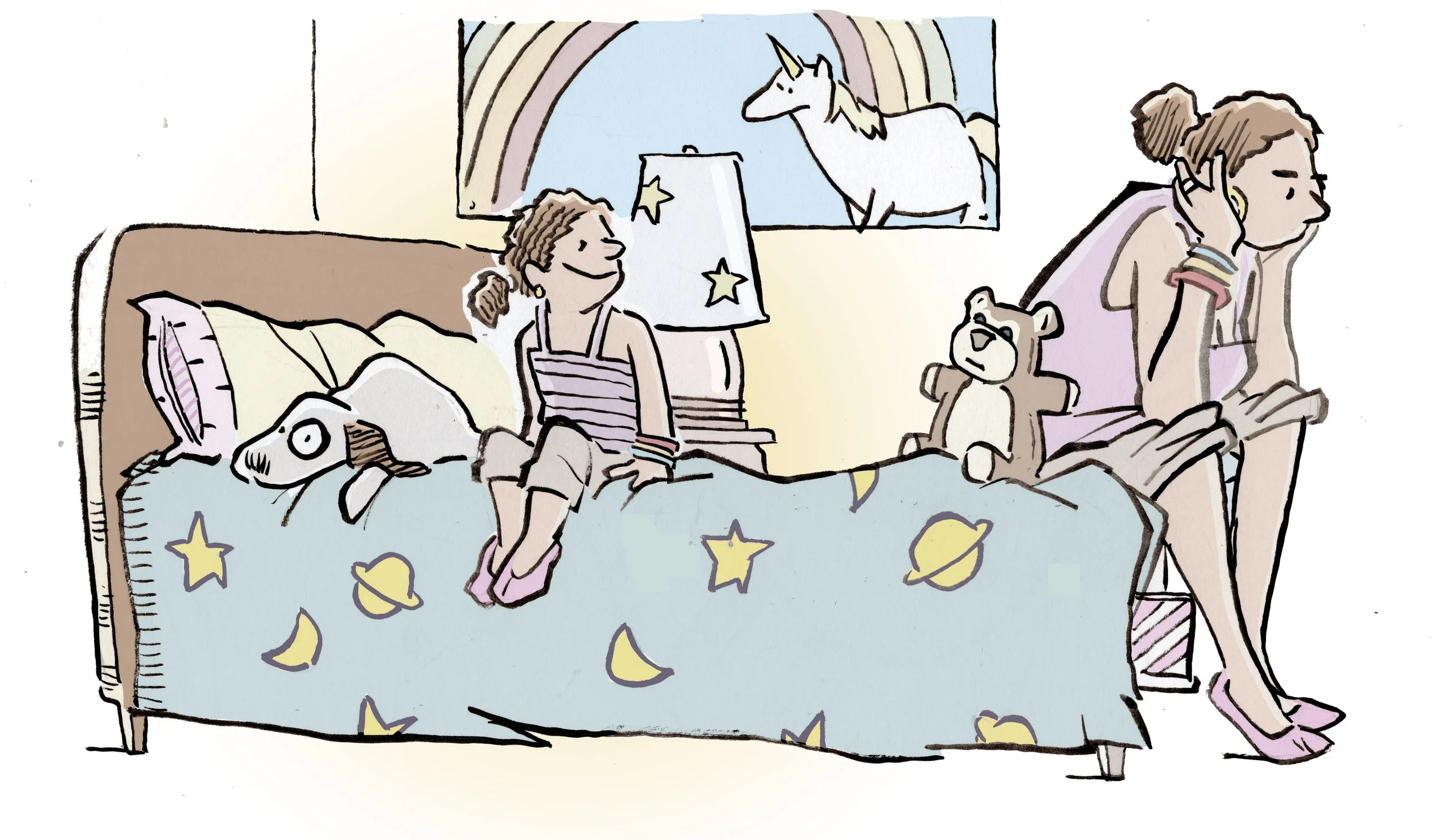
Illustration by John Klossner
“Youth is the gift of nature, but age is a work of art.”
-Stanislaw Jerzy Lec
In 13 Going on 30, a 13-year-old makes a seemingly simple wish: she wants to be thirty, flirty, and thriving. The recent talk of a reboot has brought the premise back into conversation, and with it, the cultural promise the film once rested on — that adulthood meant stepping into a world of possibility. Back then, the plotline read as charmingly impatient rather than anomalous, because adulthood was still imagined as a phase of life when things settled into place: independence, confidence, an apartment with matching furniture, a career that paid the bills, and a love that had finally sorted itself out. But now, that assumption feels a bit out of touch.
For many people coming of age today, growing older does not carry the same promise it once did — and the numbers reflect this shift. Research has shown that younger adults are reaching key life markers later than previous generations. In the U.S., a 2024 Pew Research Center survey found that only 44% of adults aged 25 to 29 describe themselves as completely financially independent from their parents, and even among those in their early thirties, that figure climbs only to 67%. Living alone, getting married, and having children are all happening later, or less frequently, than they once did.
Because of this, getting older no longer signals promise but accumulating pressure and dread. Revising this story through a reboot makes it seem as if it’s going to be shot from an ivory tower, as the fantasy at its center no longer matches the everyday reality of the audience it would be made for.
By the late twenties, much of what was once expected to feel settled still feels provisional, as the markets that once defined adulthood no longer arrive in the same sequence or with the same certainty. As of 2024, the homeownership rate for adults under 35 dropped to just 37.4%, the lowest level in four years, driven by higher mortgage rates and the dwindling availability of starter homes.
Homeownership has become less of a milestone and more of a long horizon, postponed as much by economic constraint as by choice, as the typical homebuyer now pays roughly $2,800 per month, and the average Gen Zer spends $145,000 on rent by their 30th birthday — 14% more than millennials paid during the same years of their lives. The idea of “settling down” has not disappeared, but it has loosened its timeline, stretching further into the future than earlier cultural narratives once assumed it would.
Even when it comes to a fulfilling career, which once anchored the idea of stability, that sense of footing is no longer guaranteed in the same way. Of the more than 2 million students who earned bachelor’s degrees in spring 2025, just 30% reported finding a full-time job in their field, and only 45% of Gen Zers currently hold traditional full-time roles at all. But what matters more than the numbers is the negative feeling they produce: a sense that adulthood is no longer a clear threshold you cross, but a condition you move through unevenly without a fixed destination in sight.
What emerged from all of this is recalibration driven by economic forces, as the architecture of adulthood has softened and its edges are less defined than the version imagined in early-2000s cultural scripts. What used to feel like a sequence now feels like a series of dismal negotiations: with money, with timing, with circumstance. And with that, the film's core, light-hearted theme falls through the cracks of the creaky floors many are paying nearly $3,000 a month for.
But the unease around aging doesn’t just come from the shaky U.S. economy alone. There is also a cultural shift in how aging itself is perceived — something I’ve watched play out in my own generation with a particular kind of vertigo. The original 13 Going on 30 traded on the assumption that becoming older meant becoming more self-realized. Though for Gen Z and the oldest of Gen Alpha, adulthood is often framed as a pivot point of pressure to stay young rather than a promise of a richer, fuller life; a brink that comes too soon, demands too much, and closes too many doors behind it.
Aging, in this context, has now become something to fear rather than anticipate. Young adults in the 2020s have grown up in a world saturated with digital culture — where algorithms staple youth to a sense of high value, and getting older becomes a punchline or a source of anxiety rather than a rite of passage to look forward to. On social media, younger generations joke about “expiration dates” or becoming “past their prime” before they have even entered what earlier generations would have considered adulthood. Moments like turning 25 are even met with existential dread, which goes to show that birthdays are not celebrated as a step into new stages of life but are seen as a failure to remain “young enough.”
The phrase “aging like milk” — the idea that Gen Z is deteriorating faster than the generations before them — has spread across TikTok with the velocity of a shared wound, and as a result, this generation has become hyperaware of their own faces: obsessively tracking fine lines, investing hundreds of dollars in elaborate skincare routines, and turning to Botox way earlier than necessary. Fear of aging has come to be oddly consumerist in this sense, something to be managed and prevented through products and needles rather than accepted as a natural passage of time. That fixation on appearance then starts to bleed into how Gen Z interprets aging more broadly (and superficially).
Almost subconsciously, age becomes a performative juxtaposition. There is a mental tug-of-war between not wanting to be perceived as “old” and still wanting the traditional markers of being older — the big-figure salary, the high-rise, luxury apartment, and the authority or popularity that’s supposed to come with years of putting in the work. Younger generations want to reach certain stages of adulthood without necessarily wanting the time, experience, or aging that come with them, which is why their expectations can feel strangely inflated and fragile at the same time.
With all of these pressures and inanities, you can see the sociological response in how people react when they don’t immediately land into the adulthood they think they should have. When career goals stall, finances lag behind, or relationships don’t go anywhere, the instinct is often not to push forward but to regress into habits and aesthetics that feel closer to adolescence than adulthood, such as the self-infantilizing phase “I’m just a girl.” Language has adapted: “adulting” remains a verb precisely because adulthood itself no longer feels stable enough to be a noun.
In this context, the film’s “thirty and flirty” fantasy collides with today’s economic and psychological patterns in a strange, sad paradox. 13 Going on 30 once held turning thirty as a red-letter day worth rushing toward, but the culture that would receive its reboot tends to treat it as something to brace for or mourn instead.
That difference is what makes Jenna’s wish feel so distant now. To her and the early-2000s audience, growing up meant crossing into a version of life where things made more sense than they did at thirteen. But we have to face that what the film once offered as a cute, quirky moment of metamorphosis now lands differently, as thirty no longer feels like a fixed point where life resolves into clarity, but something more diffused — a stage people approach slowly, sometimes reluctantly, often without the certainty that anything will feel settled once they get there.
Perhaps that is why the premise still lingers, as it offers a version of aging that people wish were still true. Hopefully, Jenna’s new wish acknowledges that the conundrum has shifted: it is no longer about what it would feel like to skip ahead from 13 to 30 overnight. It is about what it means to spend years suspended between those two ages, in a stretch of life the original story never imagined lasting quite this long.