Apocalypse With Friends: A Love Letter to the Fabulous Killjoys
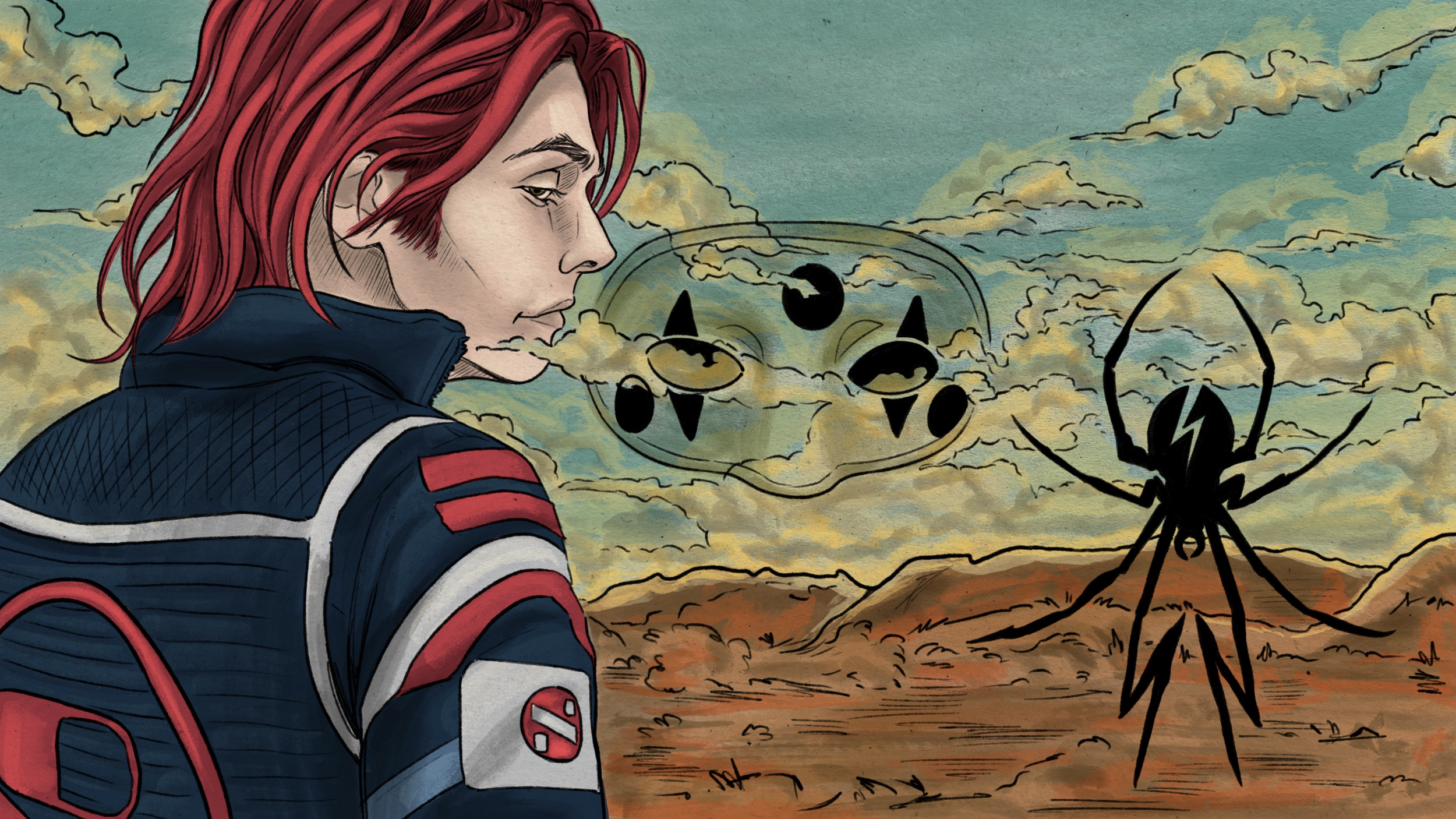
Illustration by Vlada Popyk
“Wrote it for the ones who want to get away, keep running!”- My Chemical Romance
It’s the winter of 2022, and I’m sitting in my college dorm glued to my phone screen two inches away from an Instagram live video. On screen, Gerard Way sings, screams, and rolls around on stage. While my roommate is out partying, I’m scrolling through the MCR tag on Tumblr, watching as people frantically predict what the upcoming song will be. While my poor Mac tries to keep up with the influx of new posts, I listen to the two concert attendees laugh and sing along.
In between each song, I hear one of them joke: “Play Sing, they’ve got to play Sing,” and I can't help but smile. I smile at each new post and comment I see, predicting DESTROYA, or asking for Planetary (GO!), or hoping that they’ll end with Vampire Money. During one of the coldest and loneliest winters of my life, I saw an influx of love for Danger Days, my favorite album, from a community that once handwaved it.
I’m not totally sure when people started loving Danger Days. There have always been fans of the album, of course. There has always been art and fanfiction about the characters, and a few of the songs are beloved by fans en masse, but generally I’ve seen it regarded as MCR’s weakest album. Some regard it as the album that broke MCR up, though it is well documented that outside pressures and personal issues were the real reason for the band's initial breakup.
Although when it came out, Danger Days was less popular than the band's other albums. Many saw it as their move away from emo, moving away from the black and white of the Black Parade era, with an aesthetic focus on bright colors and a dystopian desert landscape. Danger Days also saw the band's full embrace of the concept album. While their previous two albums, Three Cheers For Sweet Revenge and The Black Parade, technically had storylines and characters, Danger Days continued to build upon this idea.
Each band member was now a member of the Killjoys, a rebel gang taking on the evil corp Better Living Industries in a post-apocalyptic world. The album was introduced by Dr. Death Defying, a pirate radio host who sends messages to the Killjoys and the rest of the world's inhabitants. The album has been accompanied by comics, livestreams, and huge amounts of fan-made lore.
While there has always been a lot of love for this project, many listeners didn't connect with the album. Some common complaints I have seen levied against the project are that the lyrics are cheesy or lacking depth, there is an overreliance on repetition, and that the album suffered from the move away from emo and towards a more conventional rock sound.
Despite all these critiques, there have always been fans, like me, who love this project, and over the past few years, I’ve seen an influx of love and appreciation for this album online. I don’t know if there is one specific reason for this. There's probably a long list of contributing factors. MCR’s return and subsequent tours likely had a huge influence, as more people went back and re-listened to the band's discography. But I think that Danger Days was an album with a message for the 2020s.
Danger Days was released in 2013, America was still relishing in its Obama era hopefulness. Sure, there were controversies; Americans were still recovering from the Great Recession, the ordered attacks on Libya and Yemen, while fringe alt-right theories began to arise online, but there was hope.
On the surface, America was healing its wounds, moving forward as a country. The world was going to get better; this was the generation that was going to save it. Even in much of our popular dystopian media, the world was dark and bleak – totally in opposition to the aesthetics of the early 2010’s.
Considering this political and media landscape, Danger Days manages to not quite fit. The bright colors of its main characters juxtaposed against its desert landscape, the gaudy villains. As well as the album's frankly depressing theme, that, despite the fact that the world is doomed, we must continue to try. None of it quite lines up with the conventions of the era. But it does today.
In a time where the fate of the world seems increasingly hopeless, Danger Days is an album that offers hope. The album presents a world that has already been brought to ruin, and yet this group of friends continues to survive. A world in which the apocalypse has already happened; a local diner is the hangout spot, and its inhabitants are full of color and life, not monochromatic grey and black. The revolution is conducted by a group of friends, communicated over radio waves, and concerned with protecting each other. The end of the world is nigh, but you still get to hang out with your friends.
So much of our world today feels isolated. Our political movements take place online and are rife with infighting and sometimes even hatred for each other. Every day, it feels like I’m watching the world end from behind a phone screen. Danger Day’s shows joy in the inevitable and resistance against impossible odds. Even when we fail, we have to keep going, to keep caring about each other.