Movie Studios Think Your Kids Are Dumb
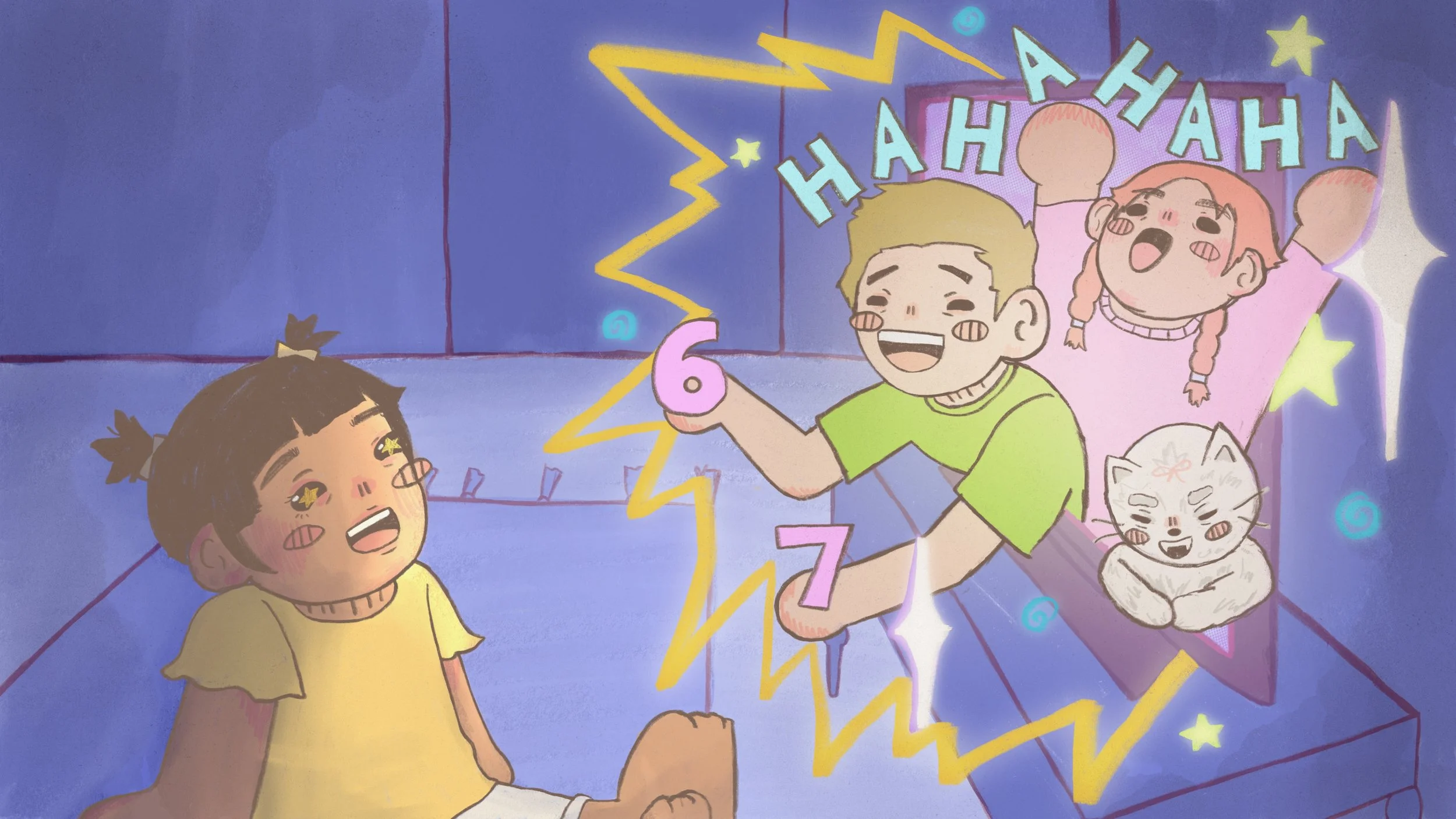
Illustration by Geliza Paunan
“Kids’ movies are just ads now” sounds like a lazy complaint until you actually watch what’s being put in front of them. But I have to realistically ask, do we want our kids growing up into critical thinking, emotionally intelligent adults or addicted, consumer driven gambling addicts? Because what Hollywood is creating for children these days is walking a fine line towards the latter and parent’s dollars are the say whether we allow it to continue that route or not.
I’m an adult now but love to rewatch older children/family movies. At first I thought maybe it was just my nostalgia taking over, but after rewatching those iconic movies a billion times, I am curious to see what’s new. Because sometimes we all need a lighthearted, cute, family friendly story.
But every time I see what kids are watching these days, or whatever is being put out, I am so turned off by animation, characters, stories, script, and marketing. Most of the time it looks dumb, and the jokes are embarrassing. “That’s because it’s for KIDS.” Is what I assume many are going to say. But my question is, why are we treating children as if they are dumb?
Once we ask that about the media being made and put out for the younger generations, it starts to sound less like cynicism and more like probable pattern recognition. There’s a formula to so much of the content being put out. The same hyper-saturated visuals,same breakneck pacing, same dialogue that explains everything before a child has a chance to feel anything or think for themselves. It’s so loud, it’s bright, it’s frictionless! And it’s everywhere.
What’s being sold as “entertainment” increasingly feels like something closer to a product. Not just because of the merchandise machine that inevitably follows, but because the films themselves are engineered to behave like it: instantly engaging, easily digestible, and just addictive enough to hold attention without asking for much in return.
And that’s the real shift we’re seeing here in this market of films. Despite their success, the data says it's not that children’s films have gotten worse—but that they’re merely safer. Less risk for loss of money. Plug in the formula and they know kids will eat it up because it's easy entertainment and addicting. ALl of it is controlled, optimized, built to perform, not to resonate.
And that’s the issue here, it’s treating their audience like they can’t handle realistic dialogue, strong and complex storylines, or would have respect for quality art and animation.
There was a time when kids’ movies didn’t feel like they were afraid of their audience. They trusted children to sit with things—to feel confused, or sad, or even a little bored. Films like The Iron Giant, A Bug’s Life, or The Incredibles weren’t designed to constantly stimulate. For goodness sake, The Incredibles is really about a man unraveling under the weight of a midlife crisis from his age and job, turns to infidelity, secrecy, and emotional distance from his family and told through realistic dialogue. That it resonates with children at all is a testament to how effectively it translates adult anxieties into something visually and emotionally accessible.
Big, unwieldy ideas—grief, identity, power, failure—filtered into something a child could step into, even if they didn’t fully understand it yet.
These are real-life, human scenarios designed to translate and be creatively interpreted for everyone of all ages. So that we can all sit together and enjoy the film. I used to go see these films as a child with my sibling, parents, and grandparents and we were all equally entertained and had something to appreciate. That’s why they were labeled "family" movies.
They didn’t flatten the world. They gave kids a way to ease into it. Storytelling is the best way to teach kids about the world before they experience reality for themselves.
That kind of storytelling is artistically richer and it actually matters. Psychologist Daniel Goleman, in Raising an Emotionally Intelligent Child, argues that children don’t develop emotional awareness by being shielded from difficult feelings, but by encountering them in ways they can process. Stories are one of the primary ways they do that with learning to recognize emotions, sit with them, and eventually make sense of them.
Moreover, a 2025 study on storytelling and emotional development in early education found that consistent exposure to narrative-based learning significantly improved children’s emotional regulation and focus—jumping from just over a third in early assessments to nearly 87% after storytelling interventions. Other studies on language acquisition show that children exposed to richer, more varied storytelling develop stronger vocabulary, more complex sentence structures, and better overall communication skills.
In other words: stories that challenge kids (even slightly) help build the very skills these films now seem to avoid engaging.
Which makes the current landscape feel… backwards.
Instead of trusting children to rise to the material, the material is being lowered to meet what studios assume children can handle. Dialogue is simplified. Emotional beats are rushed or undercut. Language is flattened to avoid any moment of uncertainty. It’s all designed to keep things moving, to prevent disengagement, to hold attention at any cost.
But attention isn’t the same thing as engagement.
Children aren’t passive consumers waiting to be entertained into silence. They’re active participants. They interpret, they question, they imagine beyond what’s on screen. When everything is spelled out, when nothing lingers, when there’s no space to wonder or feel—there’s less for them to do. The experience becomes something closer to consumption than connection.
And then there’s the commercial layer, which feels harder to ignore than ever. Even as studios scale back traditional ads in kids’ programming, the films themselves often function as brand ecosystems. Characters are designed with merchandising in mind before the story is even locked. Celebrity voice casts double as marketing campaigns. Cultural references are chosen for immediate recognition, even if they’ll feel dated by release.
This isn’t new, but the balance has surely shifted. What used to feel like storytelling with commercial aftershocks now feels like commerce wearing the costume of a story. The result is a kind of narrative disposability. Films that exist loudly for a brief moment, then disappear just as quickly. Nothing to return to in later times. Nothing to grow with and reflect on..
Even the attempts to “include” adults feel thinner. Instead of layered writing that lands differently depending on who’s watching, there’s often a reliance on quick, throwaway jokes—blink-and-you-miss-it innuendos that keep parents mildly awake but don’t add anything meaningful. It’s not deep but just filler.
And it’s frustrating, because it doesn’t have to be this way. Recent films like Paddington or Puss in Boots: The Last Wish prove that audiences—kids and adults—still respond to stories that take emotion seriously. I remember barely 10 minutes in to The Last Wish, ready to give up because it was so loud, fast paced, and bright that I was sure it would be another quick, silly kids movie, but i was wrong when it took a serious turn about life and morality within its first 10 minutes that got me hooked. Brilliant I thought. They got the kids' attention, eyes glued to the screen, and now they infiltrate life’s biggest fears of avoidance in love, grappling with mortality, complex family dynamics, and abuse of power, all in one. DreamWorks… I see what you did there.
But that was kind of like a needle in the hay in terms of big production storytelling. In the end, the majority of studios don’t seem to trust that children can handle or want to watch stories with existential questions or let alone sit through it for 90-120 minutes in one sitting. And then see it again, and again.Because that’s the thing that feels most off right now: the lack of respect for kids.
Studios are under the assumption that kids need to be constantly stimulated, endlessly entertained, and never challenged, underestimates and shortchanges them.
Stories are one of the first ways children learn how to understand the world, and themselves within it. Strip those stories down to pure stimulation—bright, fast, forgettable—and something important gets lost in the process.
What’s being offered in its place might hold their attention. It might sell. It might even succeed in the moment.
But it’s not doing much else. It’s not built or designed to last liek anything being made for us in America these days.
And kids, perceptive as they are, can see that, feel that, and recognize that themselves. They can tell the difference between good quality and bad quality. We’re setting them up to think the world is simply designed to distract them and keep them hooked on consumerism. And they will figure it out eventually for themselves and ask us and their parents why we made this for them.