My Beef With the UN: When Did Effort Stop Buying Opportunity?
Illustrated by Vlada Popyk
The first few months of post-graduate life had me sitting in a bright-eyed limbo. I surfed countless job application websites, saving them all and planning out when I would apply to each one. I then waited for a subsequent job interview.
A year later and they still never came.
Since then I’ve done all the things a good applicant should do: I tweak my CV to highlight the best qualities for every separate job I apply to, I rewrite every cover letter, I swallow my pride and cold email, I’ve joined a magazine so I can build a bit of rapport with the publishing industry, I started my own blog where I handle the writing, editing and promotional aspects all by myself, I’ve taken on freelance work. The CV is stacked. But so is everyone else’s.
Every graduate site that I searched for tips to land my first big girl job, told me the same thing: it’s who you know what you know. Publishing is a tight-knit industry but I wanted in, all I had to do was get my foot in the door – so I asked around.
I asked past university sports teammates whom I played polo with, friends whose yummy mummy parents had worked in publishing in their glory years – I’m even doing a copy-edit for an independent author who's a family friend. Even as someone who was relatively advantaged in this aspect, I still couldn’t get a job.
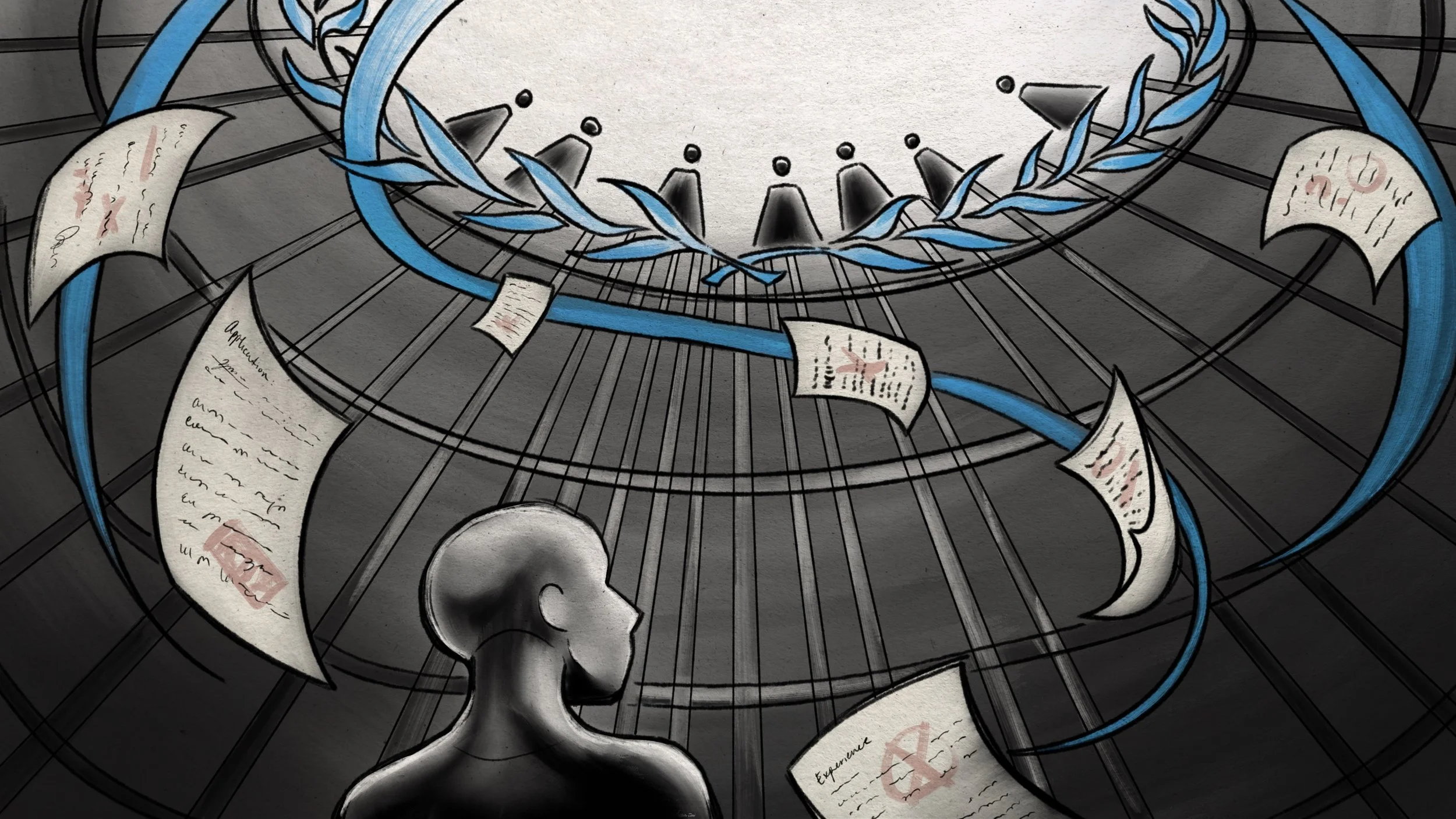
I broadened my horizons, lowered expectations, and became willing to take on more volunteering roles. I stumbled across the UN: they had a myriad of openings across different industries. Having a retired uncle who had worked for the UN, I thought I'd finally caught a break. If everyone kept telling me it was about who you knew, perhaps this was what they meant.
Three months. Full time. No pay. No visa sponsorship.
An institution dedicated to global equality was asking young people to subsidise their own labour.
I was one of the lucky ones. I had family in Geneva. Most applicants wouldn't. And yet, even with free accommodation, I still couldn't justify working a full-time job for three months without a wage.
I closed the application.
Effort used to buy opportunity — now it merely buys eligibility.
If your first qualification for helping solve global inequality is being wealthy enough to work unpaid, something has gone very wrong.
A decade ago, there was at least a plausible route into these industries. You lived in a mouldy house share, earned very little, and worked your way up. Today, even that route feels increasingly out of reach. Before you've earned your first salary you're expected to have accumulated years of experience, contacts, published work and often periods of unpaid labour.
Today we still give young people advice designed for a labour market that no longer exists. The latest official figures regarding youth unemployment in the UK reveal that 16.2% of 16-24 year olds are out of work, the highest rate since 2014. It’s no surprise when every entry-level job requires a degree, 2-3 years experience, an expectation of being paid peanuts and competition against career natives who are also being pushed out of legacy jobs.
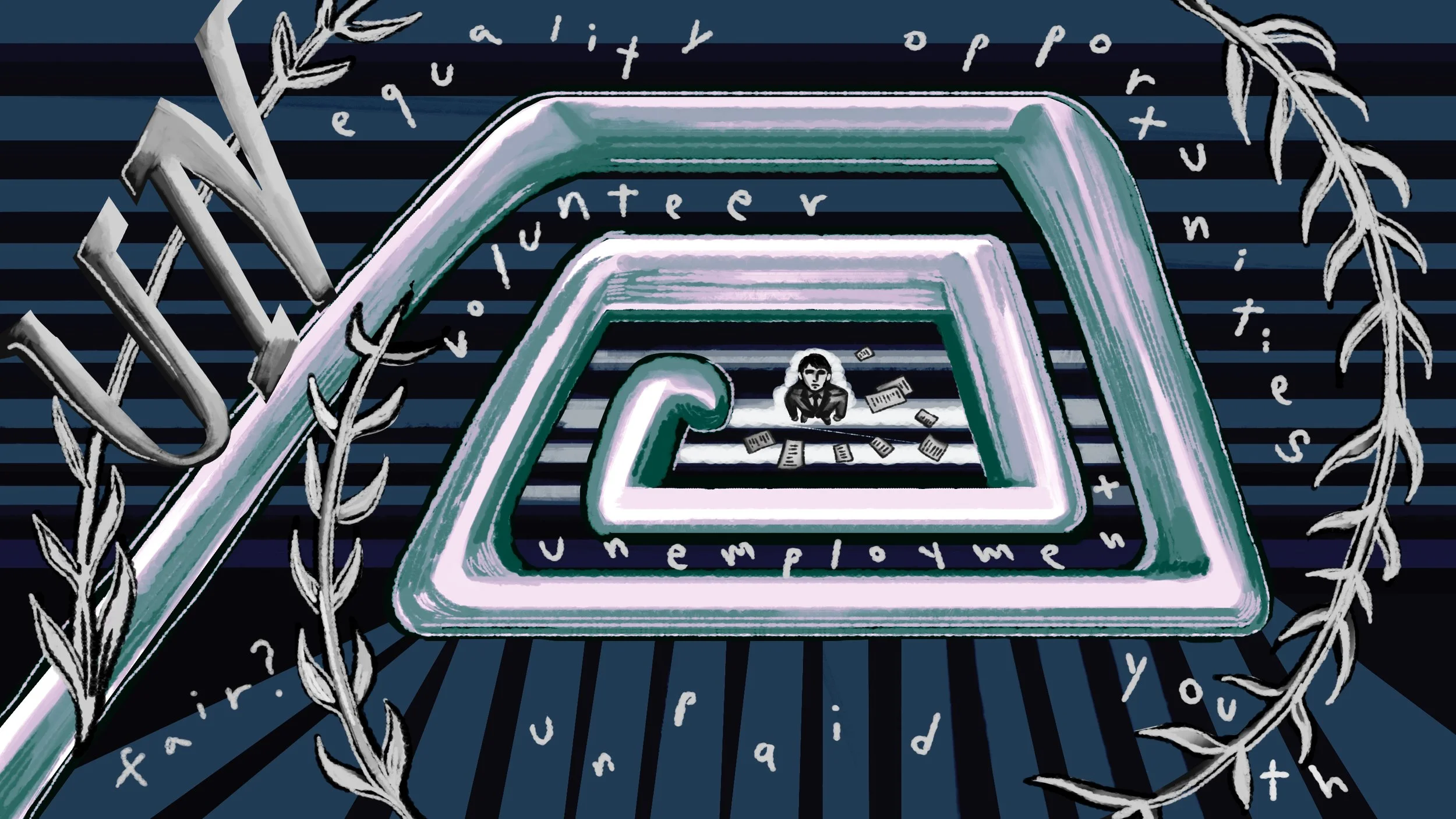
The employment industry’s declining process is only amplified at its most obvious entry points. The UN’s recruitment practices do not exist in isolation, they reflect a wider labor market in which entry level work is defined by moving goalposts. For young people, breaking into almost any profession has become a financial endurance test. Those without family support or independent means are often filtered out long before they have the chance to demonstrate their ability in the job market.
Illustrated by Heather Han
Within an institution founded on principles of equality and international representation, this creates an uncomfortable contradiction. The organisation may not intend to exclude applicants from less affluent backgrounds, but a recruitment system that relies on inaccessible entry routes inevitably does. The result is a pipeline problem: the people who eventually shape international policy are disproportionately those who could afford to enter it in the first place.
This is not to suggest that those from privileged backgrounds are incapable of understanding inequality. Rather, it is to recognise that a system which consistently filters out people with lived experience narrows the perspectives represented within the institution. If access to international careers increasingly depends on economic privilege, the diversity of voices informing global decision-making becomes constrained before recruitment has even reached the interview stage.
What era of cultural incompetence have we entered that an organisation that's meant to promote equality, inadvertently excludes many people because getting a foot in the door is no longer economically sustainable for most young people?
Work has become pay-to-play; degrees. Internships. Volunteering. Networking. Freelancing. Personal branding. Newsletters. LinkedIn. Tailored cover letters. The list of preconditions for employment keeps growing while stable employment itself becomes harder to reach. Being employed as an occupation of itself has become inaccessible, the process of finding a job has become more demanding than unemployment itself once was.
The contradiction is difficult to ignore. Institutions regularly publish reports on youth unemployment whilst simultaneously relying on unpaid or underpaid young workers to sustain their own talent pipelines. The problem is recognised, documented and discussed, yet often reproduced by the very institutions committed to addressing inequality.
I got the idea for this essay in June. It’s August.
I’m still here.