You’ll Be Back
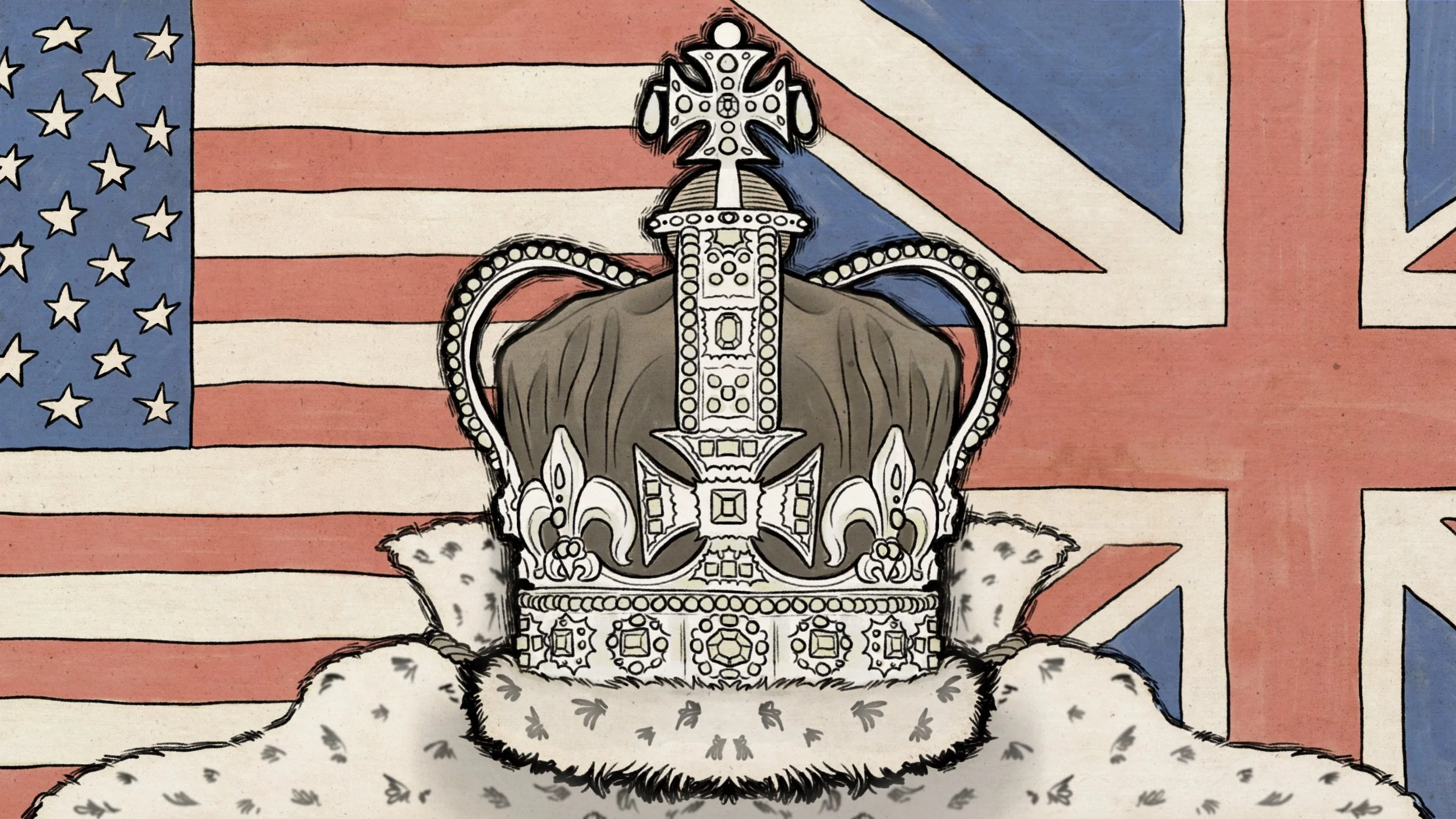
Illustration by Vlada Popyk
His Majesty’s Great Empire. Rule, Britannia!
Great Britain; once a harbinger of cultural legacy so expansive that it was once described as ‘the empire on which the sun never sets.’
One could say that the small country of Great Britain has since taken quite a downhill trajectory since its conception in the sixteenth century. As its colonies clamoured for freedom and the ideological foundations of empire were dismantled, Britain’s global authority has since renounced its imperial power, with its conquests now a dark reminder of its autocratic past.
Fast forward a few hundred years and imperial Britain is dead, marred with a tarnished legacy. But despite Conquest's penchant for ideological subjugation, I’m not sure that the superiority complex quite left the minds of its inhabitants – a postulation of imperial delusion still present in the minds of British nationals like some sort of sick eugenic inheritance.
In the 21st century, British authority is more theatrical instead of threatening, defined by posh accents, tea, royal pageantry and the lingering image of Elizabeth II. Power becomes aesthetic rather than overtly coercive, something presented as tradition rather than enforced dominance. This reformed view of Britain is visible in wider political culture, making “Britishness” itself feel like a recognisable character rather than an active imperial force.
It is this version of Britain that appears in Hamilton – Britain’s imperial power is embodied by King George III himself. It mocks him as petulant, insecure and delusional. The song “You’ll Be Back” posits him as a jilted ex lover threatening violence, insisting that it's necessary. The humour works because the audience knows how the story ends: the empire loses — the song undercuts imperial authority.
Upon Trump’s re-election, Hamilton’s “You’ll Be Back” has resurfaced in online political discourse, often repurposed, with many reminiscent parallels to an America defined by its instability and cultural divisions. In some cases, particularly in British commentary, the song is used to frame the United States as returning to a kind of historical pattern – echoing the language of colonial dependence and political disorder that once defined the relationship between Britain and its former colonies.
What was originally a satire of imperial arrogance shifts in tone to an ironic nostalgia. Even when sited jokingly, the gesture can slip into “I told you so” territory, where imperial voice is no longer simply mocked but quietly inhabited.
In this reversal, the satire becomes unstable. Irony in Hamilton is anchored in the moral and historical distance between imperial authority and its collapse, but in contemporary reuse that distance begins to fade. Irony flips, and mocking imperial delusion starts to be re-performed.
At the beginning of Trump’s second term, one of his social media rants gestured toward the idea (in jest) of the United States ‘British Commonwealth.’ Consequently, Hamilton made the rounds again as a cultural reference point, this time paralleling tyrant Trump with King George III. But across the Atlantic, a slightly different tone emerged. Among some British users, the song was paired with images of American political turmoil in a way that King George’s original proclamation: that the colonies would eventually recognise their need for imperial order and yearn once again, for the safety of the empire. On platforms such as TikTok, swathes of users took to the app with screenshotted articles of Trump’s declaration overlaid with Jonathon Groff’s voice in the background, subtly reframing satire as something closer to vindication – the instability of American democracy had embodied the very logic the song was meant to mock – now a self-fulfilled prophecy.
The mockery of the USA is all too common in the UK and across Europe, where America is often cast as the chaotic child and Europe as the knowing adult. Whilst there is a cruel irony in the so-called ‘land of free’ spiraling towards a fascist nightmare, this critique can easily slide into self-mythology. From a European vantage point, America is frequently framed as an exaggerated spectacle – unstable, excessive, almost caricatured in its dysfunction.
But this framing does more than criticise; it reassures. It allows Europeans to position themselves as comparatively rational, as though a certain sensibility has been preserved on this side of the Atlantic. In doing so, it begins to echo older logics of cultural hierarchy – those that once underpinned imperial thinking. The irony directed at America can, in this sense, reopen imperial ways of imagining the world without explicit endorsement. What presents itself as satire risks becoming something closer to quiet affirmation; instability belongs elsewhere, and that order – however mythologised – has already been secured at home.
What makes this reversal so easy is not just cultural arrogance, but a deeper political instinct: the tendency to see order as something that must come from above. When societies begin to feel unstable under the promise of ‘freedom’, they often become more receptive to paternalistic forms of leadership, where authority is not unchecked control, but protection to preserve a necessary structure.
Trump's re-election follows this same paradox, but instead is framed as a rejection of liberal constraint. His presidency draws on the aesthetics of authoritarianism: strength, control and decisiveness. This results in a cyclical logic in which disillusionment with freedom produces a renewed desire for authority, even if said authority threatens the freedoms it claims to restore.
From this perspective, the cultural reuse of Hamilton is not just a passing joke. Satire of empire and political chaos becomes a way of quietly reinstating the idea that some societies require guidance. These moments don’t overtly endorse imperial thinking, but they make it an option – recasting hierarchy as something familiar, even comforting, within the language of irony.
Alarmingly, this is not the first time Hamilton’s historical framing has become culturally relevant. Five years after its debut, Trump finished his first term as president and a Trump-esque parody of “You’ll Be Back” circulated online in 2020, re-titled “I’ll Be Back”.
In harrowing premonition, some of the lyrics state:
“And if you still dissent,
I will kill democracy to remain the president
Blah blah blah blah blah”
Once again, this pattern of paternalistic fantasy re-emerges, suggesting that this inevitable return to control is what restores social order. This parody of authoritarianism starts to feel like prophecy because political reality echoes recurring anxieties about democracy, instability, and control. What’s striking is not whether it functions as prediction, but the way it changes meaning over time.
For Britain, it means a sanitised memory of Empire, expressed through a comforting superiority that avoids confronting democratic fragility. For America, satire doesn’t predict the future; it reveals a culture that returns to the same emotional structure: the sense that authority is always about to reassert itself in a more concentrated form.