Illustrated by Geliza Paunan
– a critique on critique on critique on critique
There is a point where introspection is no longer useful. I could spend the whole day thinking about who I am, my past, where I want my life to go, but thinking about any of that has never made my life better. In fact, it only stresses me out and upsets me because I can identify every issue in my life, but not necessarily have the ability or means in my life to fix it. So then, you are just looking, and really, what good is that?
Since the late 2010s, we’ve experienced a shift in social awareness.
We've become marginally better at recognising that human behaviour doesn't exist in a vacuum. People's actions, reactions, communication styles, and difficulties can be influenced by neurodevelopmental conditions, mental health, upbringing, and circumstances that aren't immediately visible to others.
This is a positive development—we've become more conscious of the fact that not everyone experiences the world in the same way, and that extending understanding can make a considerable difference.
But it gets to a point.
Awareness now comes with an expectation of constant accomodation; the mere suggestion that there might be another explanation for someone’s behaviour is treated as an act of hostility. We've developed a vocabulary for understanding one another, but we seem to have lost the ability to navigate the inevitable disagreements and misunderstandings that come with being human.
It seems everywhere you look everything is either ethical or irredeemable, now that we have found explanations for why bad things happen or why the world is the way it is we simplify everything into two categories: good and bad. But life is often a whole lot of grey. There is no pathway for better in the modern world, only abolition—instead of cutting off people’s heads, we cut them off in conversation.
We seem to have developed an extraordinary confidence in our ability to distinguish good people from bad people, despite being products of an imperfect society ourselves. Human beings are complicated, morality is historically contingent in many of its applications, and the desire to reduce people to a single moral judgment is often deeply inadequate.
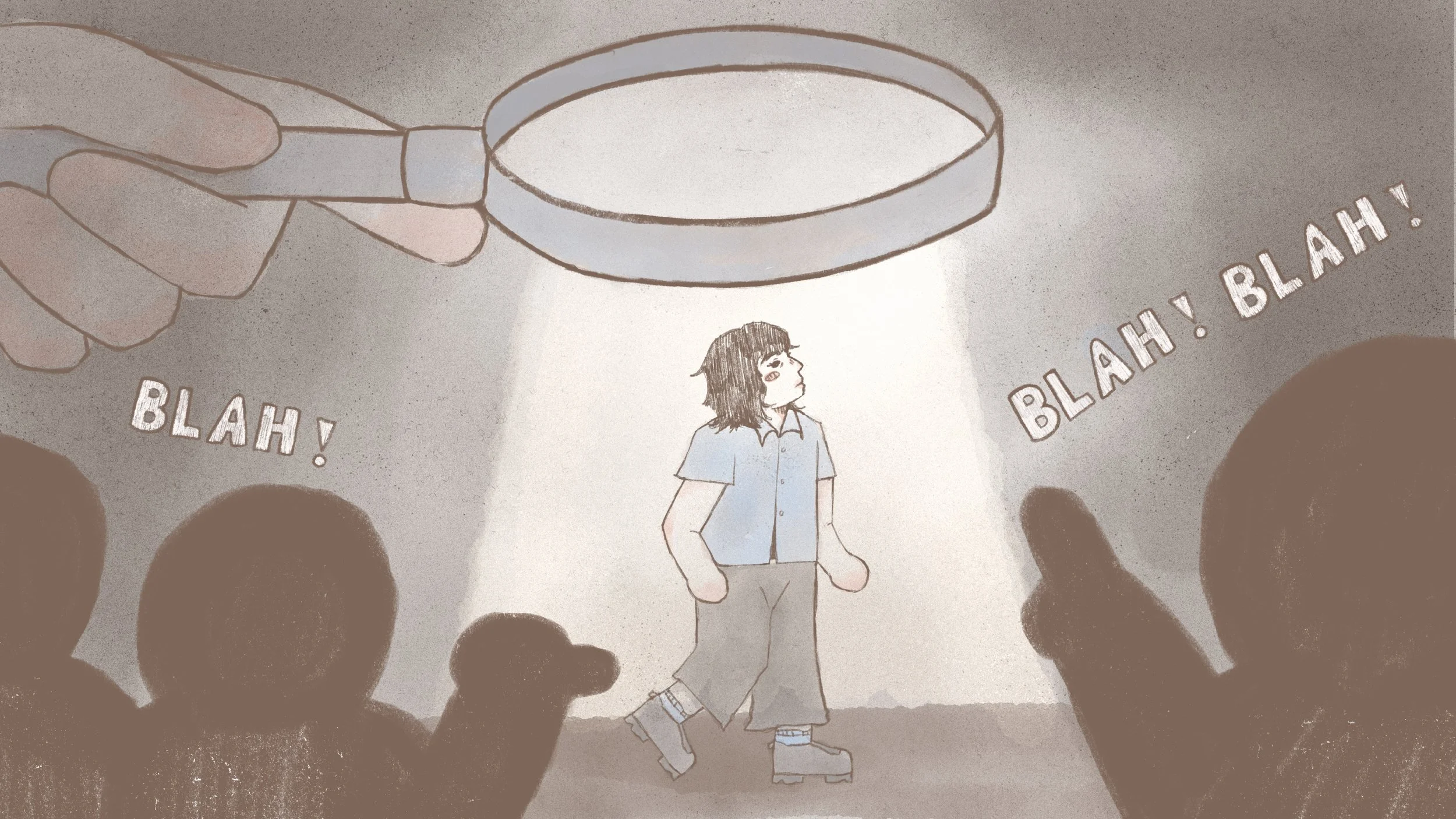
As a result, our daily interactions and what’s popular in the media we consume every day often only surround the process of dissecting this dichotomy. But it is impossible. In the think-piece economy everything has to be examined, evaluated, condemned, defended, contextualised, turned into a conversation, and then turned into a conversation about that conversation. Leaving us only with the inability to leave anything alone.
It’s like we’re obsessed with ourselves; everyone is following this self-reinforcing loop of morality and what it means to exist, all whilst carrying the regular troubles of the day. We exist and then think about existing and then we talk about existing, instead of doing it. This makes all that’s wrong in the world appear as an omnipotent presence, generating a suffocating feeling of its inescapability.
Reflection has become participation—everything we experience is converted into a commodity and lived reality has become a secondary experience. Everything collapses into one, giant recursive conversation about what’s offensive, why we shouldn’t support this individual, why this happened until our society is the thing constantly thinking about itself.
In 2026, we are experiencing new methods of impinged upon freedoms; data mining, flock cameras, AI identification in shop cameras, etc. But aside from technology and autocracy, we have transferred this surveillance to ourselves, contemplating whether every action is useful or beneficial to everyday self-perception.
In an attempt to immortalise ourselves within identity or history, the introspection on how exactly that can be done is what is immortalised. Everything is always ready and waiting to be written into a conclusion on how to live, instead of just being allowed to exist as a thing someone noticed or experienced.
Identity today has arguably become a much more individual project. But can you build a Man? Perhaps belonging is something you have to experience, not simply something you can intellectualise your way into.