Make College a Choice Again
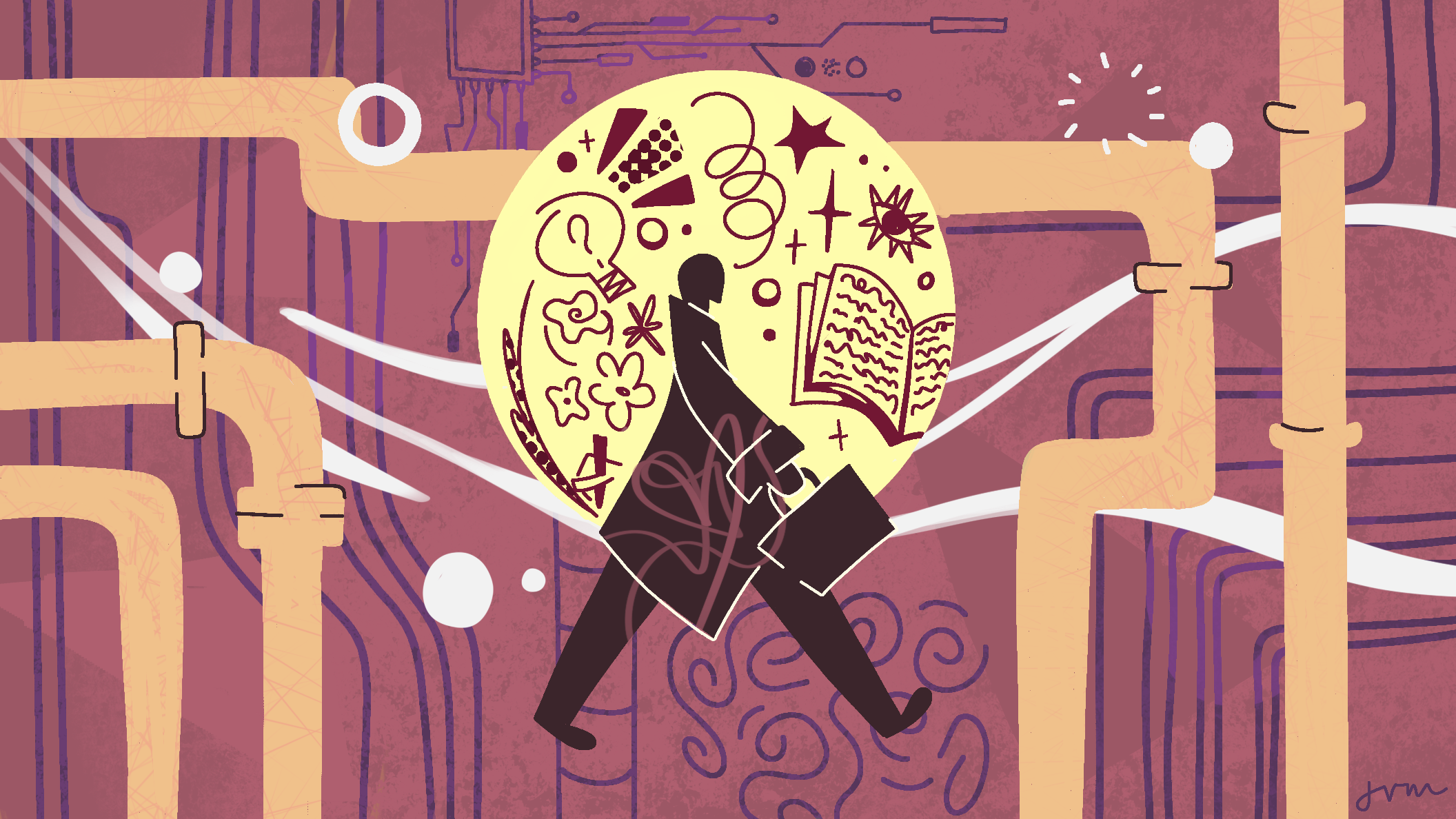
Illustration by Jaydah Victor-Morse
In one month, I'll be walking the stage in my college graduation. My experience was nothing short of life-changing, from the friends to the skills to the connections I made. But I'm also a realist, and have seen many of my classmates trek tepidly through their degree, avoiding extracurricular learning opportunities, not turning in assignments, showing up late to class, if at all. While it’s true that college is a learning opportunity–both in your degree field and as a functioning human–I found myself questioning the intentions of these students. Why were they here? This week, I wanted to explore this question by taking a look at the college preparation and admissions process, and how the job market has replied. This research has forced an unnerving realization: we need to stop sending our kids to college.
First, I wanted to explore how we got here; what a Bachelor’s degree used to be compared to what it is now. In 1970, there were 7 million undergraduate students in the United States. In 2025, there were nearly 17 million. While that number seems relatively proportional–higher education has certainly become more accessible in the last 50 years–the rising rate of college graduates has far outpaced the rate of entry level jobs. What used to be a clear path between high school and the white collar market has ballooned into a frenzy of too many workers, and not enough work. In 2026, unemployment of recent college graduates sits at 5.6%. While not terribly concerning when compared within the country’s total unemployment rate, when you take a closer look, the cracks start to appear.
41.5%. That’s the underemployment rate of recent college graduates in 2026. Underemployment statistics track graduates in roles that do not require a degree–essentially, jobs they’re overqualified for. THAT is incredibly concerning when contextualized by the median $25,000 in student loan debt. When collated, we’re seeing that nearly half of all college graduates are working, or not working, in careers not benefiting from their Bachelor’s degree, while being in outstanding debt that many are struggling to pay off. Currently, 7.7 million loan borrowers are in default.
From the moment we enter high school, college is pushed on us in every assembly, every AP level class, and every extracurricular activity. Undertaking a Bachelor’s degree becomes an assumed inevitability rather than an academic or career step. For many, it becomes a delay; by staying in academia, they aren’t forced to enter the job market. The college preparation obsession in American high schools has led many students onto degrees without a proper assessment of their options post-high school. “Among recent high school graduates, fewer than half said their school prepared them for any option other than college or a job.” I was fortunate enough to know what I wanted to study by my senior year of high school but many high school students apply and commit to colleges without a clear vision. While I believe college can be beneficial in allowing students to engage with a wide-range of subjects, it’s a hefty price tag for a self-discovery retreat.
What entry level jobs now look for is specific training or experience, a clear display of graduate skills that would help an applicant thrive in a hyper-specific role. “Half of hiring managers said recent graduates were unprepared for the workforce and difficult to manage.” Internships are the new golden ticket into the job market, with many students beginning applications during the spring of their freshman year. For students unsure of their focus area, this only worsens their chance at employment post-graduation.
The stigma around the trades, gap years, and externships in high school has cost millions of students the chance to make an informed decision about pursuing higher education. “Both parents and students said they didn’t know as much about other pathways [besides college] such as certification programs, internships, apprenticeships, military options, or entrepreneurship.” The social stigma around not immediately pursuing higher education means high school kids are forcing themselves into a mold of career development that no longer works. While the data still supports the lifetime economic benefit of holding a Bachelor’s degree, the unemployment rate for trade workers is lower than that of degree holders, and when considered with the underemployment rate, the trades’ limited training at a more affordable price seems like the better option for many graduates unsure of where their interests lie.
With the uncertainty and chokehold over the entry level job market, taking on debt to pursue a college degree is no longer the advantage it once was. We, as a society, need to remove the stigmatization of the trades as some sort of intellectual failure, and prop them up as the backbone of societal functioning that they are. Students in high school are told to set their sights high, to go to college, and find a good career. This is a smokescreen, and many high school graduates may realize that there are jobs in reach without a Bachelor’s degree that would set them up for a long-term career. For those looking to start a family and embrace the classic American working-family life, the debt of college and its forthcoming uncertainty in securing a full time job delays that ability.
Also, I think we often forget that you can go to college whenever you’d like. While it may feel like you’re falling behind in the years post-high school graduation, the benefits of living and working before pursuing a degree helps prevent the chaotic rush of college decision-making common amongst high school seniors. I’m far from the first to say it, but putting 17 year-olds in thousands and thousands worth of debt is poor financial planning; it’s advice from years past, when a Bachelor's degree meant a straight pipeline to employment.
I’m not arguing against college, I’m not even arguing for less people to undertake a Bachelor’s degree. But what we, as a society, need to embrace is opening up alternate avenues post-graduation, to provide guidance for that eighteen-year-old, chubby-faced graduate, who suddenly has the whole world available to them without the bruises to navigate it. We need to take them by the hand, and walk them to the beginning of the trail.