The Last Place Aversion Theory
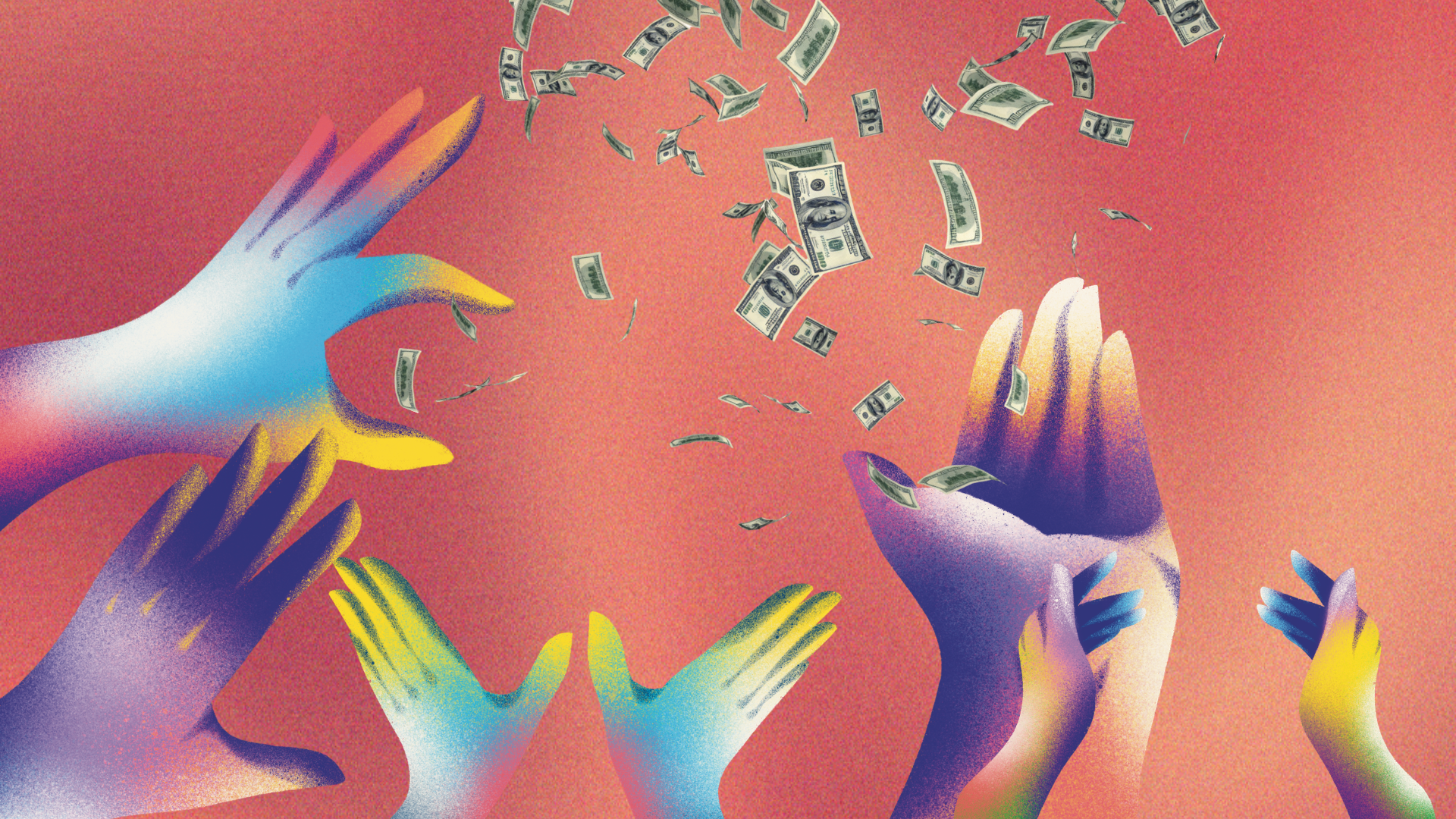
Design by Eden Pela
Recently, my TikTok feed has been drowning in finance videos. They’re not videos by gurus on rented yachts, but videos by regular people who are struggling to pay rent with their two jobs; who skip meals in place of electric bills; who walk two hours to work to forgo rising fuel prices. This is the grim reality of the United States’ working class. Many of these creators aren’t asking for a life of luxury, but merely that their full time income covers basic expenses. It seems like common sense policy, in a capitalist utopia anyone working a 40 hour work week should be able to afford to live in that area.
What surprised me about these videos were not the messages of the videos themselves, but the comments. They weren’t written by millionaires or even the middle class, but by other working class people who claim that the original poster “just isn’t working hard enough,” and that “there are no excuses for laziness.” One commenter bragged about his 80-100 hour work week, about how proud it made him to provide for his family. But it raised a question for me, wouldn’t this man rather support a raise in the minimum wage so that he could spend more time with his family? It seemed common sense to me at first, but as I started researching, I realized this rabbit hole goes quite a bit deeper than mere misinformation. Soon, I realized it may also be the achilles heel of the Democratic Party’s economic policy.
I first wanted to understand why people in the working class would be opposed to an increase in the minimum wage. In a 2014 study, Buell, Reich, and Norton found that members of a study group just above last place in a simulated ranking were more likely to gamble, give points to groups above them rather than below them, and oppose redistribution of points in the chance that the group below them would benefit. They called this effect Last Place Aversion. Imagine this scenario for a moment. You’re a hunter-gatherer, moving across the Siberian wilderness. Within your group, there are key leaders, members of the tribe that hold rank over one another. You, along with a few others, are the luggage boys. You’re the physical labor, easily replaceable. It’s gross work, but at least you’re alive. If the luggage boys all get injured, you sure don’t want to be the weakest. Medical attention, food, and supplies are going to be prioritized for the healthiest, the strongest. You’re still at the bottom of the totem pole, but at least you aren’t going to be left to die.Their theory substantiates those commenters’ unwillingness to accept their financial direness and acknowledge that they’ve been taken advantage of by the system.
Suddenly, 2024 makes sense, as the economy was the number one issue for voters and many voted solely in the belief of which candidate would raise their purchasing power. Far and wide Republicans won in districts and states with the lowest average incomes, where wealth inequality between the 1% and working class looks like the preamble to the French Revolution. Classic conservative economics preaches lower tax rates and more control over the paycheck, which gives the illusion of economic mobility to those just barely keeping their heads above the water.
Trump promised cheaper groceries and tax cuts at the expense of social welfare programs. Where Democrats aim to increase the minimum wage, which would close the widening gap between wages and cost of living, Republicans’ claim to be focused on lowering the cost of goods. But prices aren’t the problem. A stagnant average wage has stifled the working class into irrelevance. As executive salaries continue to soar, the working American has been left behind with rising inflation, rising prices, and no one in Washington who seems to care. But this is the psychology of the Republican-voting working class. They might have it bad, but as long as someone else has it worse, as long as there’s someone who’s making just a little bit less, then they’re provided a sense of relief.
So where can we go from here? It’s important to understand the psychology behind Last Place Aversion, which boils down to a feeling of agency within an economic situation. Sally Haslanger has written some great research on the people’s perception of agency within structural systems, which I urge you to check out. What she concludes is that, “social meanings can be used to interpret phenomena—such as the political or economic conditions—in new ways, creating conceptual and practical connections that generate new options (and new constraints) for agency.” (Haslanger, 58) By framing economic success proportional to working hours, rather than purchasing power, politicians–and I mean on both sides of the aisle–have created a society averse to excuses. If you’re struggling with money, it’s your own responsibility. The system isn’t broken, you are. When Democrats propose welfare benefits, it scares off key voters in the working class who don’t believe social programs will benefit them; the procurement of their money feels like an encroachment on their economic agency.
Democrats simply can’t win on the economy. Their position middle-right only frightens off the bottom of the working class whose paychecks are lifelines. The arrival of left-leaning politicians like Zohran Mamdani in New York City, and Bernie Sanders, offer a future that presents a total redistribution of wealth and power. However, the democratic establishment will continue to hold them back, and until a complete left-overhaul takes place, these politicians will struggle to make their case to working class voters. Haslanger remarked that, “social meanings shape our agency, but our agency also shapes social meanings, and, in doing so, shapes intelligibility within practices, and what practices we use for coordination.” (Haslanger, 59) Basically, until there’s a mass recognition of the failed US wage market, there is no chance for reform. Until the hustle culture of American business is recognized for its abuses rather than its procurement of some mythical American Dream, wages will continue to stagnate as prices continue to rise.
The Democratic party will continue to lose on the economy. While 2026 is sure to sway blue as Trump’s economic facade is de-masked, the vote of the working class will continue to remain reactionary as neither party makes significant headway in amplifying purchasing power.
What started as anger towards that TikTok commenter has now turned to pity. Last Place Aversion is experienced by those who have, or feel they have, no control over the system that's trapped them. And until a political movement shows promise for a full economic restructure, the American working class will continue as the ball in this economic tennis match.