Walking the Runway Through the Ruins of Journalism
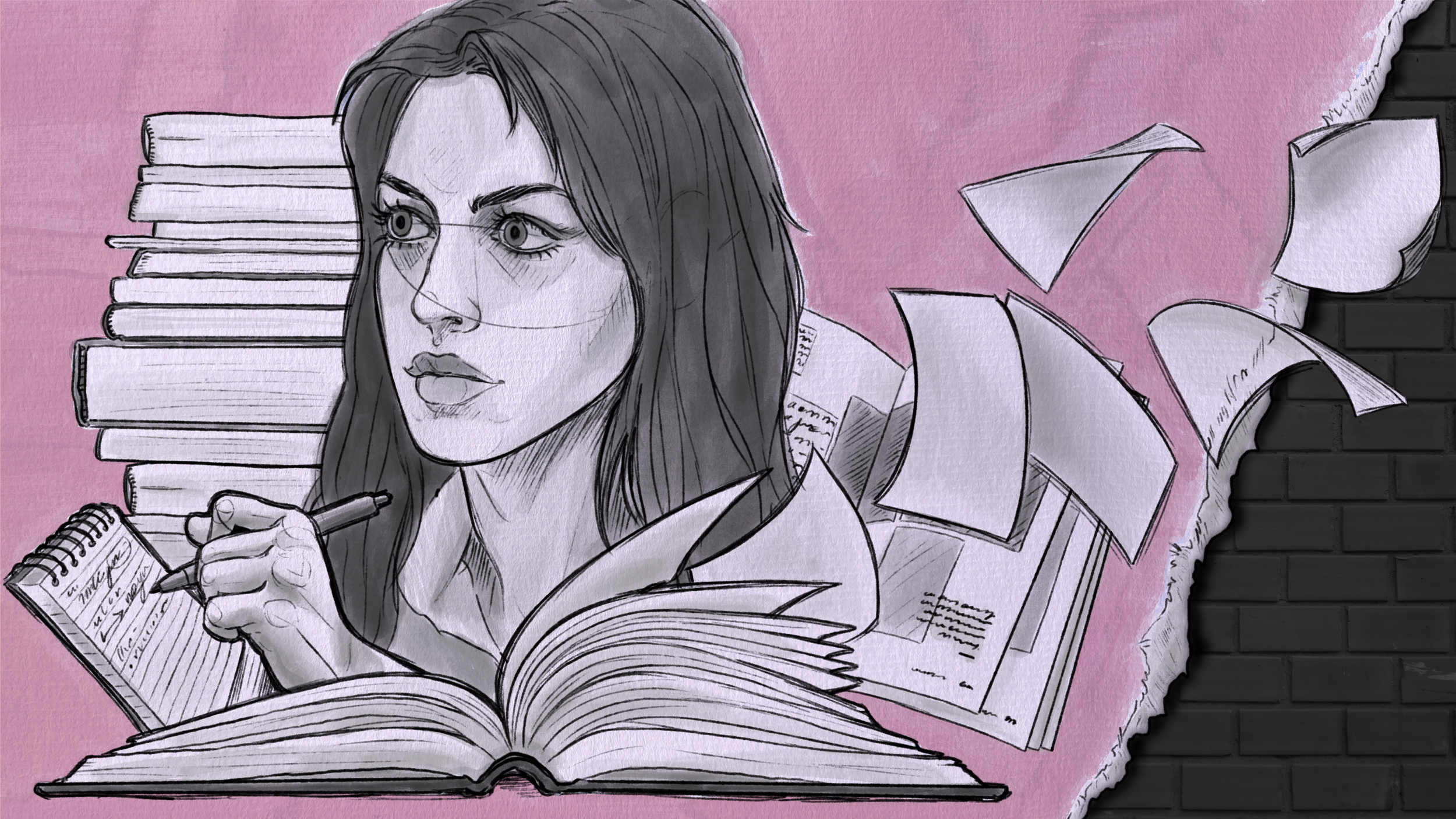
Illustration by Vlada Popyk
“The future just comes rushing at us like… well, like the lava of Pompeii. Our job is just to let it take what it wants to take. One day it’s going to come, and it’s going to smother us all.”
-The Devil Wears Prada 2 (2026)
In 2006, The Devil Wears Prada presented elite magazine publishing as ruthless, exclusionary (and, if I must say, exhausting), yet indisputably powerful. Editorial authority carried mystique, as print magazines shaped cultural trends, fashion editors functioned as gatekeepers, and publications like Runway represented a world where legitimacy was granted through hierarchy, expertise, and limited access. Nearly twenty years later, however, The Devil Wears Prada 2 arrives in a radically different media milieu — one defined by layoffs, influencer culture, collapsing print industries, algorithms, and the erosion of institutional authority. While the sequel attempts to address the collapse of journalism and editorial prestige, the film struggles to confront that decline constructively. Its reliance on nostalgia, recycled conflict, and familiar power struggles mirrors the very institutions it depicts — industries unable to evolve beyond the systems and hierarchies that once sustained them.
The original film depended upon the illusion that editorial institutions still possessed cultural permanence. Miranda Priestly’s authority worked because it felt absolute; she represented a centralized form of power capable of determining taste, relevance, and legitimacy. The famous cerulean sweater monologue distilled this perfectly: fashion was not frivolous, but a top-down system through which culture itself was filtered. Even Andy Sachs, who initially dismissed Runway as superficial, began to recognize the seriousness of the profession she had entered. Beneath the allure, the film still believed in a hierarchy in which sacrifice and labor could eventually grant access to prestige.
That world no longer exists in the same way, and The Devil Wears Prada 2 is clearly aware of this. The film gestures repeatedly toward the instability of modern journalism through references to mass firings, evolving media, and the declining readership of publications like Runway. Yet these acknowledgments remain a bit weightless. The sequel never fully dramatizes the emotional, cultural, or economic devastation of this collapse. Instead, it repeatedly retreats into the familiar rhythms of workplace rivalry and backstabbing.
This becomes the film’s greatest weakness. The stakes of journalism’s decline are spoken about, but not exactly felt. Characters reference how rapidly the industry has changed, yet the narrative never allows the audience to experience the precarity of that transformation. Runway continues to oscillate awkwardly between being treated as unserious journalism and being framed as a cultural piece of the pie worth saving, creating a contradiction the film never resolves. If the publication lacks legitimacy, the audience is left wondering why its survival matters so deeply. But if it does possess cultural value, the film fails to articulate what that value now means within a media ecosystem dominated by influencers, virality, and rapid content production.
Ironically, the sequel’s inability to imagine new narrative stakes mirrors the institutional rigidity it attempts to critique. Much like the original film, the central conflict once again revolves around attempts to oust Miranda from power by ambitious executives, corporate restructuring, and hidden enemies, only for Andy to intervene and preserve her position. The repetition is both evident and revelatory. Rather than confronting the collapse of editorial authority directly, the film falls back on the same formulas, hierarchies, and character storylines. In doing so, The Devil Wears Prada 2 narrates an industry still attempting to solve contemporary problems while remaining loyal to outdated structures.
This issue becomes most noticeable through Andy and Nigel, who emerge as parallel figures shaped by misplaced loyalty. In the original film, Andy leaves Runway in pursuit of more “serious” journalism, believing traditional reporting would offer greater legitimacy and fulfillment. Yet decades later, that path leads not to professional triumph but to an eventual layoff and murky water sputtering from a bathroom faucet. Her eventual return to Runway undermines the certainty of her original decision. Ironically, it is not elite journalism that remains loyal to Andy, but the fashion world she once dismissed. Nigel’s recommendation secures her place with Runway once again, suggesting that personal loyalty matters more than the supposed prestige of “serious” journalism itself.
Nigel’s trajectory is equally revealing, as despite years of devotion to Miranda and Runway, he remains unrewarded, still functioning as a supporting figure that is overlooked. The film briefly points toward his importance during the runway show, where he delivers a speech that is swiftly cut off as the narrative shifts back to Miranda. The unfortunate moment feels emblematic of both the sequel’s and journalism’s broader problems: they cannot fully shift their gaze away from old forms of authority long enough to recognize the people who actually uphold them. Nigel’s loyalty has not granted him recognition or advancement. As Andy once did, he has dedicated himself to a system that cannot replicate that devotion.
Miranda herself also feels fundamentally altered by modern media, though the film never fully interrogates why (other than calling her a dinosaur). In the original movie, her authority felt terrifying because editorial gatekeeping still carried immense cultural weight. In the sequel, however, that power appears diminished — not necessarily because Miranda has changed much, but because the structures surrounding her no longer function the same way. Algorithms now shape taste as much as editors do, influencers bypass institutional approval entirely, and visibility has become decentralized. The sequel understands this through sporadic lines, but it rarely translates that understanding into a climactic moment through Miranda. She continues to operate according to the logic of old media authority, even as the world around her has shifted.
This unwillingness to confront collapse directly leaves the film suspended between critique and nostalgia. The Devil Wears Prada 2 wants to acknowledge the deterioration of journalism and publishing, but it remains emotionally attached to the lore of editorial prestige that made the original film a cult classic. The result is a sequel that often feels trapped within the very structures it attempts to examine.
In a twisted way, that contradiction is the film’s most honest insight. The institutions that once defined journalism, publishing, and cultural authority continue to survive less through innovation than through lingering faith in the hierarchies that once gave them meaning. Underneath the nostalgia and familiar glamour of The Devil Wears Prada 2 lies an industry still looking backward, unable to confront what journalism has become — or what it may need to be next.