Why It’s Hard to Feel any Sympathy for the Rich
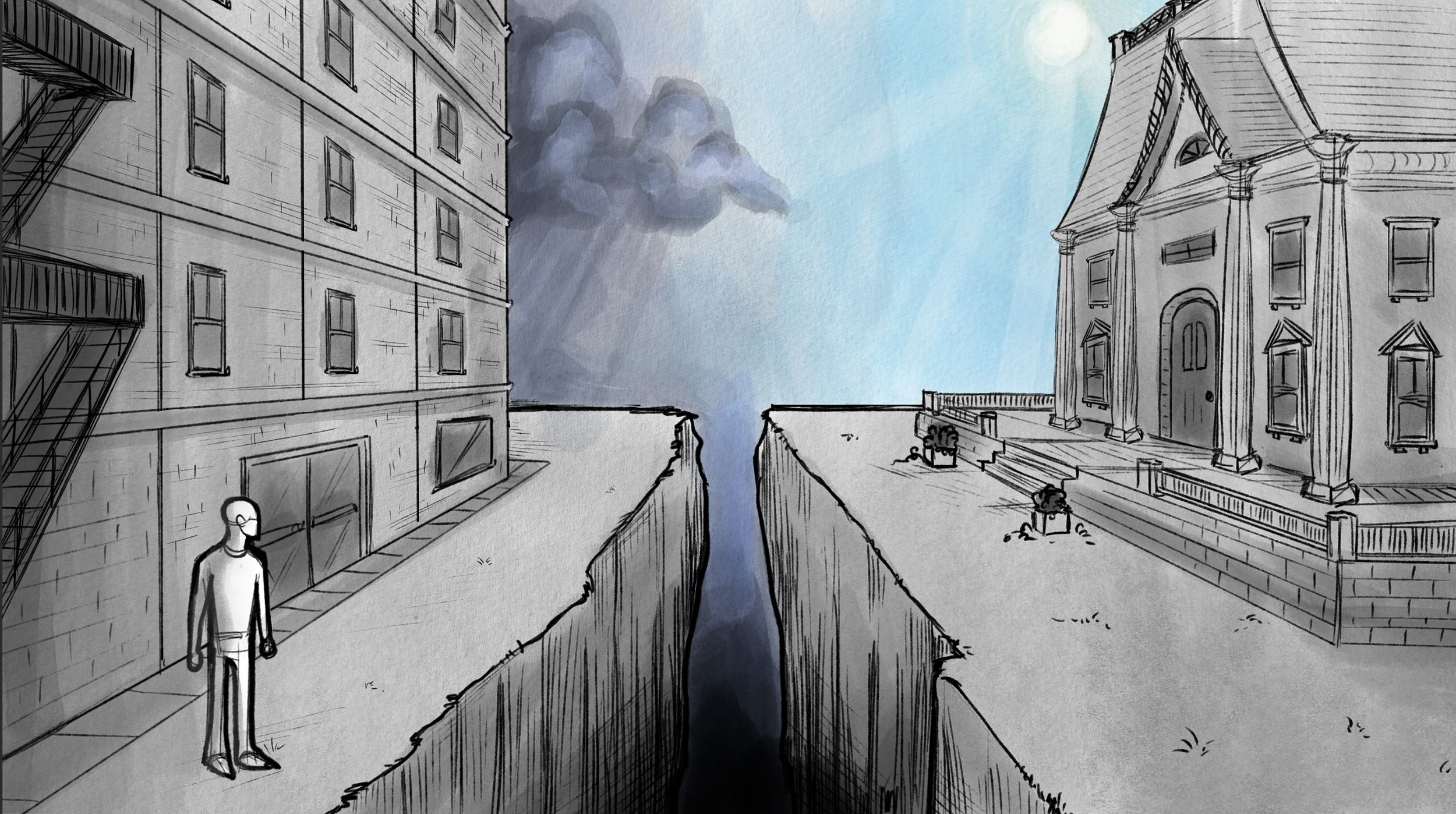
Illustration by Vlada Popyk
How the wealth gap creates cynicism in classism
There are particular kinds of videos that circulate online during periods of economic decline. A celebrity explains the emotional discipline required to maintain an ultra-thin body. A wellness influencer details the psychic burden of “clean eating.” A billionaire posts a photo from a yacht alongside a caption about burnout, exhaustion, or the importance of “protecting your peace.” Somewhere beneath the content are thousands of comments from people calculating grocery bills, rationing medication, skipping meals, or wondering how they will afford rent next month.
The disconnect manifests in different ways with people with a lack of sympathy or empathy at these “struggles.” Either frustration, lack of interest or attention, or complete disdain.
Over the last decade, inequality in America has transformed from an abstract policy issue into a daily sensory experience. Wealth is no longer hidden behind gates, country clubs, or quarterly earnings reports. It arrives algorithmically, flooding phones for hours a day: private jets, “what I eat in a day” videos filmed inside $20 million kitchens, celebrities discussing the trauma of fame from homes larger than hotels, executives describing layoffs as unfortunate but necessary market corrections while workers launch GoFundMes for insulin or funeral expenses.
“They’re just jealous.” The modern “resentment” toward wealth is not simply about envy as many in power might brush off and say. It’s really about proximity. There’s hardly resentment towards wealth at all. We all want and need more wealth to survive and be comfortable. That's the point. To pay for quality food, pay for healthcare, education, shelter, and more.
We’ve learned throughout human history that classism, and prejudice amongst large gaps between wealth and poverty creates tension, cultural separation, and sometimes war. In 2026, this tension is like a bubbling and boiling pot.
A struggling factory worker in 1973 was not waking up to a billionaire’s morning routine. A waitress working double shifts did not spend her lunch break scrolling through influencer content built around aesthetic starvation and luxury consumption. While many could argue that social media is a great tool for connection and sharing ideas. This isn’t necessarily good or bad,it depends on who you ask, but social media has played into how it has collapsed the distance between classes while simultaneously making the material realities between them feel even more impossible to bridge.
The average American now carries record levels of household debt while housing, healthcare, childcare, and food costs continue to outpace wages. According to the Federal Reserve, nearly 40 percent of Americans would struggle to cover a $400 emergency expense. Meanwhile, the wealthiest individuals in the country accumulated trillions in additional wealth over the last several years alone, much of it concentrated within the technology sector, finance, and speculative investment markets. The result is not merely economic polarization, but emotional polarization and a growing inability for people living in survival mode to meaningfully relate to the problems of those whose lives appear insulated from survival altogether.
This does not mean wealthy people are incapable of suffering from a biological, human standpoint. Addiction destroys rich families, too. Depression does not disappear at a certain tax bracket. Loneliness scales upward just as easily as wealth does. But public empathy is rarely distributed in a vacuum. It is shaped by context, scarcity, and power.And increasingly, many Americans view wealth not as passive fortune, but as an active architecture of extraction.
“Money doesn’t buy you happiness. But it does buy you freedom” says a 29-year-old nanny in New York City. And freedom is wealth (without the financial aspect) for so many. If money buys you freedom, why wouldn’t you want it?
Women in Singapore are some of the leading demographic in the world of corporate and entrepreneurial leadership with more than half of the women population making up the workforce. A lot of this has to do with the option of having family care services (nannies) that are a normal accommodation in Singapore. WHile it doesn’t cost a lot and is affordable for so many families, it helps parents be more successful in their working careers. Sometimes lifestyle accommodations get us closer to what others deem as a luxury.
This is how modern Americans now have views of healthcare, food, shelter, and other basic needs. They’re all luxuries for the ultra wealthy. An emergency room bill could be $30,000 in one visit. $250,000 to give birth in a hospital. $60,000-$250,000 for a degree at a 4 year university, $50-$400 for insulin, a basic necessity to live for type 1 diabetics, per month. $100-200 in groceries a week per person (not including dining out). The list goes on. All while the minimum wage is anywhere between $7.50-$15.00 depending on where you are in the United States. This makes a lot of citizens angry for good reason.
This anger only intensifies when ultra wealthy people complain publicly about things that are easily resolvable from their standpoint including doctors visits, access to quality groceries, travel to move, experience culture, arts, and more all for fun; as well have freedom to live comfortably in many other ways.
Furthermore, when billionaires are perceived not merely as detached from suffering, but as contributors to it: private equity firms buying up housing during affordability crises; pharmaceutical executives raising drug prices while patients crowdfund chemotherapy; tech executives building addictive platforms linked to rising rates of anxiety and social isolation; corporations posting record profits while laying off thousands of workers. The problem is not simply that rich people suffer differently, but that many people believe the systems producing extreme wealth are the same systems producing widespread instability for everyone else.
Research increasingly reflects this divide. Studies published in Nature Reviews Psychology and the American Psychological Association have found that widening inequality erodes social trust, increases status anxiety, and heightens perceptions of social competition. In unequal societies, people become more conscious of hierarchy and more likely to interpret interactions through the lens of power and unfairness. The psychological distance between classes expands even while the visual distance collapses. Which helps explain why public reactions to wealthy suffering have become so complicated.
When wealthy celebrities discuss restrictive diets, “dopamine fasting,” or luxury wellness regimens, many viewers do not see discipline. They see it as a choice. When billionaires discuss burnout, many workers hear someone exhausted from opportunities unavailable to most people. When public figures lament the emotional strain of fame from estates worth tens of millions of dollars, the response is often less sympathy than bewilderment: You can leave. You can rest. You can afford help.
Do humans love subconsciously to struggle?
Perhaps humans are just always looking for problems to solve and will create ones out of thin air. Or perhaps there is another uncomfortable possibility worth considering, and that humans, regardless of class, possess a tendency to manufacture struggle once basic survival needs are met. Psychologists have long observed that people adapt quickly to improved circumstances, a phenomenon known as hedonic adaptation. What once felt extraordinary eventually becomes normal, and new sources of dissatisfaction emerge to take its place. In that sense, the celebrity obsessing over the last five pounds, the millionaire publicly unraveling over social media drama, or the billionaire lamenting the pressures of success may be grappling with genuinely felt distress—even if those problems appear trivial from the outside. The issue is not necessarily whether their suffering is real, but whether societies facing housing shortages, medical debt, food insecurity, and economic precarity can be expected to view self-created struggles with the same urgency as struggles tied directly to survival. To someone wondering how to afford groceries, the pursuit of extreme thinness or the burden of managing immense wealth can seem less like hardship and more like the luxury of having the time, resources, and freedom to invent problems we know money can and has already solved.
For people trapped inside cycles of debt, precarious labor, medical vulnerability, or housing insecurity, financial freedom is not viewed as some shallow fantasy. It is viewed as oxygen. Money may not buy happiness, but it can purchase stability, treatment, nutrition, time, privacy, mobility, safety, and relief from countless forms of preventable suffering. The farther economic conditions deteriorate for ordinary people, the harder it becomes to emotionally separate wealth from protection itself. Especially when the same screens displaying elite suffering also display elite excess.
During the pandemic and its aftermath, Americans watched celebrities sing about “being together” from mansions while essential workers risked infection for hourly wages. They watched billionaires race to space while inflation hollowed out paychecks. They watched tech executives warn about the existential dangers of artificial intelligence while simultaneously investing billions into accelerating it. Across platforms, the wealthy increasingly appeared less like aspirational figures and more like citizens of a parallel civilization—one governed by different rules, consequences, and material realities. The result? alienation.
There is a reason phrases like “eat the rich” migrated from fringe political rhetoric into mainstream cultural language. Gallows humor is thriving in this economic instability. So does moral exhaustion. Americans are living through an era in which millions of people feel overworked, underpaid, medically vulnerable, socially isolated, and perpetually one emergency away from financial disaster. In that environment, sympathy itself becomes politicized.
The deeper question underneath all of this is not whether wealthy people deserve compassion. They do, as long as they’re still human (and humane) and execute all normal human characteristics themselves. Human suffering is still suffering. The more unsettling question is what prolonged inequality does to a society’s capacity to extend compassion evenly in the first place.
Because once people begin to feel that the social contract has collapsed—that sacrifice is no longer shared, that hardship is no longer mutual, that survival itself has become stratified, empathy is capable of breaking down alongside it. But throughout history and now in front of our own eyes, we see empathy is more abundant in those who struggle and face real life altering and difficult choices every day. There is still so much empathy exuding from those who struggle the most and have the least. It’s not the empathy that is being lost, but being redirected to primarily those who are suffering real life and death consequences or struggles that the ultra rich would never experience. And that’s where the gap is. That is what the wealth gap has created beyond just financial separation.